

All is now set for the epic battle for the 2027 general elections with the release of the revised timetable of activities by the Independent National Electoral Commission (INEC). With the new timeframe, party primaries — along with the resolution of disputes arising from them — will run from April 23 to May 30, 2026. Campaigns for Presidential and National Assembly candidates will begin on August 19, 2026, while Governorship and State Assembly campaigns are scheduled to commence on September 9, 2026.

Already, the Electoral Act 2026 recently signed into law by President Bola Tinubu has brought significant changes to how political parties can nominate their candidates. The new law has scrapped indirect primaries, leaving political parties with only two legal options for selecting their flag bearers: Direct and Consensus options. Under the amendment, every registered member of the party votes to select the candidate. This is intended to give power back to the grassroots members rather than just party delegates. The system where delegates often selected through ward and local government congresses vote on behalf of the party members is no longer a valid option. However, parties can still choose a candidate through a consensus arrangement, provided all aspirants sign off on the decision in writing. The removal of indirect primaries is largely seen as an attempt to curb the influence of money politics and godfatherism.
In the past, critics argued that indirect primaries allowed wealthy individuals or governors to buy delegates, making it difficult for popular but less wealthy candidates to win nominations. By removing indirect primaries, the law essentially forces parties to choose between mass participation (Direct) or total agreement (Consensus).

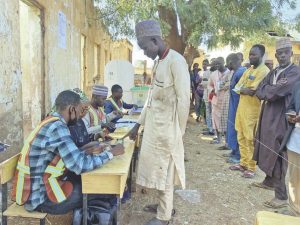
Expectedly, the response has been split along party lines and internal factions, as the delegate system was the primary tool for party leadership to maintain control. Although the ruling All Progressives Congress (APC) is generally supportive in public, framing it as a gift to the nation that strengthens grassroots democracy, behind the scenes, some governors are reportedly concerned that direct primaries will be significantly more expensive and harder to manage. They claim that a direct primary will be too expensive or cause violence, and therefore everyone should agree on one candidate, which is usually the governor’s choice. They often argue that direct primaries are essentially mini-general elections. For a direct primary, the party must set up polling units in every single ward across the state, hire thousands of ad-hoc staff, and provide security for every location. Governors usually end up footing the bill for party activities in their states. They argue that forcing a direct primary for every single position (from House of Assembly to Senate) will bankrupt state party chapters.
The Peoples Democratic Party (PDP), on the other hand, is visibly divided. One faction has condemned the law, alleging it was rushed to favour the ruling party’s structure. Other members, however, welcome the shift, seeing it has a way to weaken the grip of party godfathers who typically control delegate lists.
Unease in governors’ camp
Sunday Sun findings revealed that second term governors have been unsettled by the new law. As such, there is a quiet movement among some outgoing governors to challenge the logistical feasibility of the law in court. They argue that the 30-day window to submit a Certified Register to INEC is too short for states with millions of members, hoping to get a court injunction that might allow a one-time exception for indirect primaries in 2026/2027 due to administrative exigencies.
In Nigeria, governors are often called the godfathers of their states. Their ability to influence who goes to the Senate or House of Representatives is their primary bargaining chip with the President in Abuja. Now that a governor can no longer deliver candidates through the delegate system, they fear that their relevance in the national political hierarchy will drop significantly.
Secondly, because they are not running for re-election as governors, their primary concern is succession, picking who takes over their state and then securing a seat in the Senate. The scrapping of indirect primaries has thrown a wrench into these plans. Since they can no longer control a small pool of delegates, Sunday Sun reliably gathered that second-term governors are shifting their focus to the party register. They are initiating massive membership re-validation drives at the state level.
By controlling who gets a party card, they effectively curate the electorate for the direct primary. If they can ensure only their loyalists are registered as party members, a direct primary becomes just as predictable as an indirect one.
In line with an established tradition, many second-term governors plan to retire to the Senate in 2027. Some are reportedly making deals with the presidency or party leadership. So, they are likely to allow a more open primary for the governorship in exchange for a protected or consensus ticket for their own Senate bid.
In the past, all a governor needed was control a few thousand delegates. These delegates were often state employees, political appointees, or local loyalists. By controlling the delegate list, the governor effectively decides who wins. Direct primaries move the power to millions of party members, making it impossible to easily coerce a massive crowd the same way they can a small room of handpicked delegates.
Governors elected on the platform of APC are also wary that opposition parties could influence their primaries. Since direct primaries only require a party membership card, governors fear that members of the PDP or Labour Party could rent or borrow APC cards to vote for the weakest APC aspirant, making it easier for the opposition to win the general election.
Bickering
This insinuation has led to accusations and counter accusations of manipulative motive between the ruling APC and the opposition coalition. A chieftain of the African Democratic Congress (ADC) and former Lagos PDP Chairman, Tunji Shelle, characterized the APC’s push for direct primaries as a self-centred manoeuvre designed for manipulation.
“They know that throwing everyone into a direct primary will be in their favour because they can afford to pay delegates at all levels,” Shelle alleged. He further claimed that the ruling party intends to choose candidates for weak parties by sending members to register undercover in opposition ranks to vote for compromised aspirants.
Shelle pointed to past internal frictions, such as the displacement of former Governor Akinwunmi Ambode, as evidence of how these processes can be weaponised.
His words: “Their leader can send people to register in other political parties in order to destabilize them. They can afford to pay delegates at all levels. That is the reason why they did it—not because they like democracy. They did it to suit a particular purpose that will be exposed during the primaries and congresses. They will start killing themselves because many people will turn out, and those who are not paid will fight those who are.
“They did this when they wanted to displace Ambode during their primary; they brought boys from motor parks, making them vote as many times as they wanted. All the money meant for the development of this country is being geared toward the next election. Now, they have the governors in their pockets—30 out of 36 governors belong to their group. Direct primaries will suit their purpose of intimidating other parties.
“They will choose candidates for weak parties and sponsor people to destabilize them. I know those who are doing it for them in Lagos. We are waiting.
“The APC is a self-centred political party. Its leadership will only do what they can manipulate. They know that throwing everyone into a direct primary will be in their favour.”
Seye Oladejo, the spokesperson for the Lagos State chapter of the All Progressives Congress (APC), in a sharp rebuttal, dismissed allegations of interference, urging opposition parties to focus on their own internal organisation rather than blaming the ruling party for their crises. “Opposition parties should get serious and stop taking the Nigerian people for granted,” Oladejo stated. “Primaries are internal affairs. What happens within the opposition has nothing to do with the APC; we are busy with our own processes. It is a lazy man who accuses his neighbour of being responsible for the crisis in his own house,” he posited.
“What does whatever is happening in the opposition parties have to do with the APC? We will also be busy with our own primaries.
“The opposition remains the greatest danger to our democracy by being unable to provide an alternative to Nigerians. They should wake up. Recent by-elections have shown that opposition parties have no chance of winning in the coming elections. They are busy manufacturing excuses every day, but Nigerians are not prepared for excuses. They want to see action; they want to see them working,” Oladejo added.
Raging debate
As political parties prepare for upcoming primary elections, a heated debate has emerged among key stakeholders regarding the integrity of the process and the potential for external interference. Senator Gbenga Obadara offered a more optimistic view of the amended electoral framework, suggesting that direct primaries could bring sanity by shifting power from governors to the general party membership.
“It is going to curb the excesses of governors who lord their preferred candidates over the party,” Obadara noted. He explained that the mandatory submission of updated registers to INEC is intended to prevent party-hopping by desperate aspirants, though he acknowledged that party waivers still allow for some flexibility.”
To some extent, this will bring sanity to the system by giving power to party members to choose their candidates. Instead of governors lording their preferred candidates over the party, the people will now be able to vote. It is going to curb the excesses of the governors.
“The reason the amendment makes it mandatory for political parties to submit an updated register is to prevent aspirants from jumping from one party to another in search of a ticket. However, it also depends on party waivers. A party can give a waiver to anybody; if they do, a candidate does not need to be in the party for two months. It all depends on the party’s decision, but it ultimately gives power back to the people,” he stated.
Chief Chekwas Okorie highlighted a critical logistical hurdle: the validity of membership registers. He noted that while direct primaries require every card-carrying member to vote, many parties lack the infrastructure to maintain accurate records.
“Only the sincerity of INEC will determine whether a party has met the requirements,” Okorie said. He expressed scepticism that most parties would actually follow through, predicting a shift toward “consensus” candidates to avoid the burden of counting ward-level votes.
“I am more concerned about the votes of the electorate counting than how candidates emerge,” Okorie concluded, warning Nigerians to remain vigilant against compromised party officials.”
Sharing his perspective with Sunday Sun in a telephone discussion, he argued: “In a direct primary, every card-carrying member of a political party votes to elect candidates. In a presidential primary, the totality of votes from wards across the country determines the flagbearer. That requires a valid membership register submitted to INEC. But how many parties actually keep valid registers? Only the sincerity of INEC will determine whether a party has met those requirements.”
While the law makes submission of membership register mandatory, in practical reality, most political parties do not have a digitized, verifiable database of every member in every village. Without a clean register, direct primaries often descend into chaos, with two or three people claiming they won the same ward. Governors argue that until the parties have biometric-verified registers, direct primaries will lead to endless court cases that could get the party disqualified.
This position further fuelled Chief Okorie’s suspicion about the integrity of the process. “My suspicion is that most parties will use consensus instead of going through the burden of counting votes from the ward level. I am not truly concerned about how candidates emerge; I am more concerned about the votes of the electorate counting. You will find that those coming from national headquarters to conduct primaries are often compromised before members even vote. If you contest the result, they charge you with anti-party activities. Nigerians should be more concerned about the integrity of the general process than how party candidates emerge,” he admonished.
Consensus arrangement
Governors are currently the biggest advocates for the consensus option. They are reportedly holding emergency stakeholder meetings to pressure aspirants into signing withdrawal forms early.
For second-term governors, the stakes of the Electoral Act 2026 are uniquely high. Because they are not running for re-election as governor, their primary concern is succession picking who takes over their state and transition securing a seat in the Senate. Because indirect primaries are gone, many parties may try to default to consensus to avoid the logistical nightmare of a nationwide direct primary. However, the 2026 Act makes forced consensus much harder.
Every single aspirant for that specific office must provide a written, signed withdrawal letter. Even if there is consensus, the party must still hold a special convention or meeting to ratify the choice through a simple yes/no vote by members.
If even one aspirant refuses to sign the withdrawal letter, the consensus fails, and the party is legally mandated to conduct a direct primary.
The new law doesn’t just change how people are picked, but when. The shift to the 2026 Electoral Law targets candidate imposition where party leaders hand-pick a candidate regardless of popularity by attacking the two main ways it used to happen: delegate manipulation and forced withdrawals.
By scrapping indirect primaries, the law removes the middleman from the selection process. In the old indirect system, a governor or wealthy godfather only had to influence a small group of delegates often just a few hundred people to secure a nomination. Under the arrangement, leaders could encamp delegates in hotels, seize their phones, and pay them to vote for a specific person.
Previously, party leaders would announce a consensus candidate and simply tell other aspirants to step down. Under the 2026 Act, this is legally much harder. Any single aspirant can block a consensus. If one person refuses to sign a written withdrawal, the party must go to a direct primary.
This gives underdog candidates a legal shield to refuse pressure from party bosses, knowing the law protects their right to a full vote if they don’t concede. One way parties used to cheat in direct primaries was by ghost members or last-minute register padding. The 2026 Act requires parties to submit their certified membership registers to INEC at least 30 days before the primary. This prevents leaders from suddenly inventing new members on the day of the vote to overwhelm an opponent’s supporters.
“I don’t think it is good for our democracy for one person to be the sole determinant of a political party’s flag bearers,” Oladejo maintained.
Credit : The Sun