

The US president has claimed Washington has already met and exceeded all military objectives and is now giving diplomacy more time.
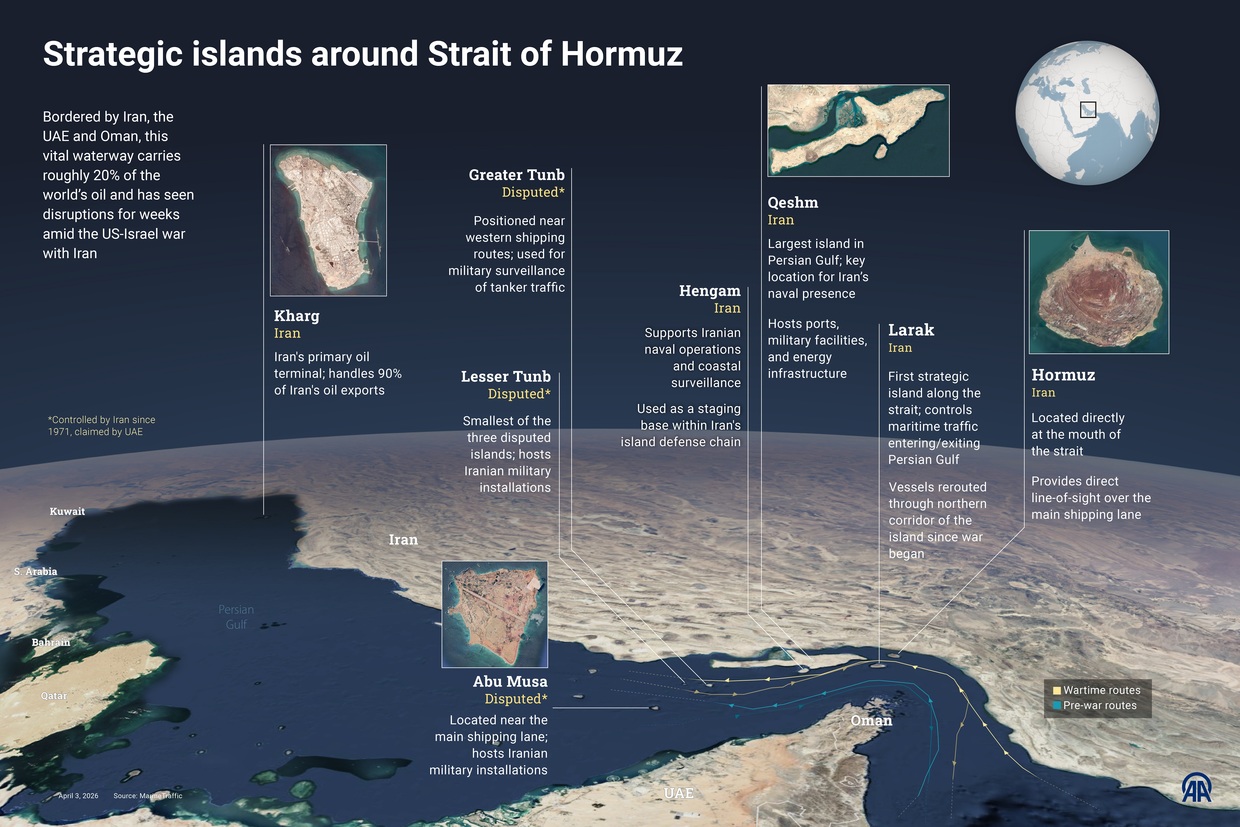
President Donald Trump has announced a two-week suspension of bombing of Iranian energy infrastructure, agreeing to a “double sided ceasefire” contingent on Tehran agreeing to the “complete” and “immediate” opening of the Strait of Hormuz.

The US president said Iran’s 10-point proposal delivered via Pakistan offers a “workable basis on which to negotiate.” Trump warned, however, that it is not good enough in its current form – and said he would order devastating new airstrikes if no final deal is reached by the new deadline.
Tehran said the move represents a “historic and crushing defeat” for the US, claiming Washington has been forced to accept Tehran’s 10‑point plan as the basis for talks.

Iran’s Supreme National Security Council has announced that negotiations with the United States will begin on Friday, April 10, in Islamabad, allocating a two‑week period that may be extended by mutual agreement.
Key developments:
- Pakistani Prime Minister Shehbaz Sharif previously asked President Trump for a two-week deadline extension after the US president threatened “a whole civilization will die tonight” if Tehran does not yield to his demands.
- Tehran’s 10-point plan allegedly includes US commitments to non‑aggression, Iran’s continued control over the Strait of Hormuz, acceptance of uranium enrichment, the lifting of all sanctions, termination of UN Security Council and IAEA resolutions, payment of war reparations, withdrawal of US combat forces from the region, and a halt to the war on all fronts, including against the Islamic Resistance in Lebanon.
- Crowds of people have taken to the streets of Tehran overnight to celebrate what Iranian media described as “Iran’s victory in the American-Zionist-imposed war.”
- 01:09 GMTThe Israeli Air Force continues to carry out strikes in Iran despite the announcement of a ceasefire by President Trump, a security official told the Times of Israel. The IDF previously accused Iran of launching at least two volleys of missiles at Israel after the ceasefire was supposed to take effect.
- 00:53 GMTThe two-week ceasefire plan includes allowing both Iran and Oman to charge fees on ships transiting through the Strait of Hormuz, according to a regional official, who had been directly involved in the negotiations, and who spoke to AP on condition of anonymity.
 © Aya Higuchi / Anadolu via Getty Images
 - 00:41 GMTGlobal oil prices plunged significantly after the announcement of a ceasefire with Iran, with US crude benchmark WTI sinking 14% to $96.7 a barrel, while the international standard Brent dropped 9% to around $95.5. Both, however, remain significantly higher than the $65–$70 range per barrel before the US and Israel started their war with Iran on February 28.
- 00:33 GMTThe White House has refused to speculate about what exactly President Trump meant when he called the 10-point Iranian proposal “workable.”“President Trump’s words speak for themselves: this is a workable basis to negotiate, and those negotiations will continue,” press secretary Karoline Leavitt said. “There are discussions about in person talks, but nothing is final until announced by the President or the White House.”
- 00:27 GMTIsrael says it has detected the second volley of missiles launched from Iran in less than an hour after the announced ceasefire between the US and Iran. “Defensive systems are operating to intercept the threat,” the IDF said, urging residents to seek shelter.
- 00:22 GMTPakistan’s PM Shehbaz Sharif has said that the ceasefire agreement between Iran and the US, along with their allies, includes “Lebanon and elsewhere” and is effective immediately. “We earnestly hope that the ‘Islamabad Talks’ succeed in achieving sustainable peace,” he added. Sharif welcomed the “sagacious gesture” and extended gratitude to both sides, inviting their delegations to Islamabad on Friday, April 10, 2026, for further negotiations.
Credit: RT News