
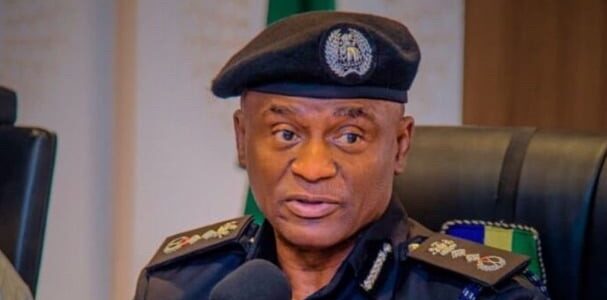
When Olatunji Disu assumed office as the Inspector General of Police (IGP), terrorists and other criminal elements were and are still holding the nation by the jugular.
Soon after he was decorated, the IGP got the mandate of President Bola Tinubu to work out modalities for the establishment of State Police. He later set up a committee to work out a framework for the decentralisation of the police force in the country.

The IGP’s recent pronouncement of a 60-month take-off plan for the new era of policing has, however, infuriated many Nigerians and interest groups who had under successive governments, clamoured for the decentralisation of the force in order to bring policing closer to the people.
IGP’s position disappointing – MBF, Coalition of Northern Groups

The Middle Belt Forum (MBF) and the Coalition of Northern Groups have come down hard on the IGP, describing his stance as disappointing. The groups noted that Nigeria is headed for more disaster.
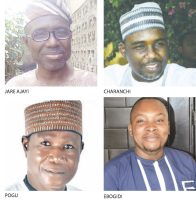
Dr Bitrus Pogu, President of the MBF, said the stand of the IGP was disappointing, adding that President Tinubu made a mistake in relying on the IGP, whom he noted is only interested in protecting his office.
Pogu said: “To us, it’s a disaster, let the president refer to individual states to give their recommendations.
“Before the military took over governance after the 1966 coup, we saw gradually how Native authority police, which we can equate with the State Police was in existence and was serving the needs of our native authorities and communities; and at that time people were not even concerned about the existence of the Nigerian Police, and many people only knew the Native Authority Police for maintaining law and order. The other security operative they saw at that time were palace guards of the traditional rulers.
“After the first coup, the military now merged everything and abolished the Native Authority Police just because we created states, starting with 12, and gradually increased to 36 plus the FCT.
“We are only saying we need policing to be close to the people. For the IGP to take that position, he’s just saying, leave insurgency to continue the way it is, and let my office enjoy the benefits of the funds that are coming into the security network while Nigerians continue to bleed. It is unacceptable to us and it’s unfortunate that such a recommendation has been made.
“We, the Middle Belt Forum and southern friends of the socio-cultural groups have established a committee, comprising very senior retired police and retired military officers – former IGPs are members of that committee. They are going to give recommendations that we believe would serve Nigerians better.
“We need County Police because we are pluralistic in terms of religion and we are so rich in diversity, especially in the Middle Belt, where the majority of nationalities exist; some of such people will not even be served at the state level, but at local government level.
“So, we will bring out something that we believe is workable, which will serve Nigerians better, but what the IG has done is unacceptable.
Aliu Jaliu Charanchi, National Coordinator of Coalition of Northern Groups, said the 60-month timeline is not just disappointing, but also a cruel insult to Nigerians.
According to him, his group once opposed the creation of state police because of fear of abuse, but when the centralised system failed completely, they had to embrace it as necessary.
“Now, you tell us to wait for five more years. That is not policy, it is negligence. People are dying today, not in some distant future.
“The North is under siege, bandits, terrorists, and criminal gangs are tearing communities apart. This is a national emergency, not a bureaucratic exercise. Any delay in security reform is reckless and inexcusable.
“As for the IGP, he has no moral ground to dictate this process. Asking the beneficiary of a broken system to midwife its reform is absurd. He is not sincere; he is protecting power, not people. His silence in the face of bloodshed says everything.
“State policing is a constitutional matter; it belongs to the legislature and the Nigerian people, not an overreaching police chief. Yet, what do we have? A National Assembly that has proven itself weak, indifferent, and complicit. When leaders admit they know about the violence and still fail to act, it stops being incompetence, it becomes complicity. “Enough is enough. Nigerians deserve action, not excuses.”
Afenifere kicks against 60-month transition plan
Pan-Yoruba socio-political organisation, Afenifere, has rejected the proposed 60-month transition period for the take-off of state police.
The group warned that such a delay could derail efforts to tackle Nigeria’s worsening insecurity. It described the plan as unrealistic and counterproductive, and insisted that the country could not afford to wait for five more years to confront escalating violence, kidnapping, and terrorism.
“It is no longer news that criminality, even in the form of terrorism, is at an alarming level in Nigeria. Many of us believe that decentralising the police is one of the most effective ways of addressing this intractable problem,” Afenifere said.
Reacting to the proposal linked to the IGP, the group queried the rationale behind the timeline.
“Does it mean Nigeria should wait for another five years to tackle insecurity? No. If the police authorities think so, many Nigerians, including Afenifere and the Yoruba people, strongly disagree. We want urgent action,” it stated.
Afenifere’s National Publicity Secretary, Jare Ajayi said insecurity remains Nigeria’s most critical challenge, warning that no meaningful progress can be made without safety.
“Without security, the economy, politics, and social life become secondary. Only those who are alive, safe, and healthy can participate in national development.
“Today, lives have become relatively cheap, given the rate of kidnappings, attacks on communities, and displacement of citizens. Are we to wait for five years to end this?” he asked.
Ajayi argued that Nigeria’s centralised policing structure has failed, citing global examples of decentralised systems.
“Countries like the United States, India, and Canada operate decentralised policing with proven effectiveness. That is the direction Nigeria must go,” he said. He insisted that if the Federal Government is serious, State Police should become operational before the end of 2026.
While acknowledging the need for constitutional amendments, Ajayi proposed an interim measure. “A presidential order can allow willing states to establish their own police immediately, while the National Assembly fast-tracks constitutional reforms,” he said.
South-East groups fault IGP
The Igbo Heroes and Icons Foundation (IHIF), and the Coalition of South East Youth Leaders (COSEYL) have raised concerns over the proposed 60-month timeline for the creation of State Police in Nigeria, stating that the plan fails to match the urgency of the country’s worsening security situation.
National Coordinator of IHIF, Chinedu Nsofor said the timeline is too long in the context of rising insecurity across different parts of the country. The group pointed to persistent incidents of kidnapping, banditry, and violent attacks affecting communities nationwide, arguing that delayed implementation would not address immediate threats.
“Security interventions require faster response measures, even if broader structural reforms are still being developed,” the group declared.
While acknowledging that the IGP has a duty to provide professional input on policing strategies, IHIF stressed that creating State Police remains a constitutional issue under the National Assembly and state legislatures.
“Technical recommendations from the police are expected, but decisions on timelines and implementation ultimately rest with political authorities,” Nsofor said. The group questioned whether the extended timeline reflects administrative caution or institutional reluctance to decentralise policing. It noted, however, that parts of the proposal, including safeguards against misuse and defined funding structures, show attempts to address common concerns around state policing.
IHIF argued that Nigeria’s centralised policing system has long faced criticism over response time and local intelligence gathering. “Decentralisation, if properly structured, could improve efficiency,” the group said, but warned that delays in rollout risk prolonging existing security gaps.
It called for a more time-bound approach that balances legal requirements with urgent intervention needs. It suggested phased or pilot schemes could run while constitutional processes continue.
Also South-East youth leaders under the aegis of COSEYL rejected the IGP’s 60-month timeline for the take-off.
The Igbo group faulted the IGP’s proposal and implementation plan, describing it as being over-prolonged and disconnected from current security realities.
President General of the group, Comrade Goodluck Ibem said the five-year delay comes at a time when kidnapping, banditry, communal clashes and violent criminality continue to escalate nationwide.
The group said Nigerians need responsive, community-based policing structures now as a five-year wait risks further loss of lives and property.
It’s insincere, insensitive – Tivi group
President General of Mdzough U Tiv Worldwide, Chief Iorbee Ihagh, condemned the 60 months proposed by the IGP for the establishment of State Police, pointing out that it is insincere and insensitive in the face of killings across the country. Ihagh, a retired Comptroller of Prison, while flaying the IGP’s proposal, said in view of the heightened killings in the country, the establishment of State Police should take immediate effect.
He noted that the police chief’s suggestion that it should be implemented in 60 months, after he must have left office, shows the president wants to stay and leave office without doing anything for Nigerians.
He said: “It’s not good at all. I don’t know why the president is behaving the way he is. There are a lot of killings everywhere in Nigeria and he is not bothered about it and the government exists primarily for the protection of lives and property.
“Look at how a General was killed and it didn’t move him. If a soldier of that rank can be killed and nothing happens, they will just say they are in control; that it won’t happen again but the next day it happens again.
“State Police is the most important thing we need now. Why wait for 60 months? By that time he will be out of office. That is if he wins the next election, I don’t think he is qualified.
“That is his thinking, he is not thinking for the country, he is not working for the country; he is working for his own interests. People are dying economically; they are killing people every day; there is hunger everywhere, fuel price is going up and he is making a lot of money; what is he doing with the money? So I condemn that 60 months proposal. I’m not in support. The creation of State Police should be with immediate effect.”
While noting that the IGP is not sincere in his proposal, Ihagh also said “but he is working for Tinubu. It’s what Tinubu wants that he does.”
Northern Christians, NRM flay IGP’s plan
The leadership of the Chairman of Northern Christian Elders Forum (NOSCEF), and the National Rescue Movement (NRM) expressed dissatisfaction over the stance of the IGP on the transition period for the creation of State Police.
Elder Sunday Oibe, chairman of the Christian group said the IGP shouldn’t have had anything to do with the formation of the new police outfits but that it should have been left for the various states to fashion out how best to deal with the formation and operations should be structured, just like the Hisba, Amotekun, and other regional based security outfits.
“I don’t see any sincerity in the 60 months proposed by the IGP. In the first place, in 60 months, both he and the current administration will be out of office. Secondly, he knows that this is not workable hence, his proposal for the delay knowing full well that another administration will throw it out.”
Similarly, Rev. Emmanuel Olorunmagba, a chieftain of the NRM), said the plan of the IGP “to delay the actualisation of State Police by as much as 60 months raises serious concerns, especially given the dire security situation confronting our nation today.
“At a time when communities across Nigeria are grappling with kidnapping, banditry, and other violent crimes, any suggestion that meaningful reform should wait for five years is both troubling and difficult to justify.
“On the substance of the proposal, one must ask, can Nigeria afford to wait for that long? From the North-West to the Middle Belt and beyond, citizens are living in fear, and the limitations of a highly centralised police structure have become glaringly obvious.
“While we acknowledge that structural reforms require planning, coordination, and safeguards, a five-year timeline signals a lack of urgency that is out of step with the scale of the crisis. What Nigerians expect and deserve is a clear, accelerated roadmap with measurable milestones, not an extended postponement of action.
“Second, regarding the sincerity and role of the Inspector-General, it is important to emphasise that the question of state policing is fundamentally a constitutional and legislative matter. It falls squarely within the purview of the National Assembly and the State Houses of Assembly to initiate and conclude the legal framework required. The role of the police leadership, including the IGP, should be to provide professional, non-partisan input based on operational realities, not to shape the political timeline of such a critical reform in a way that may be perceived as delaying progress.
“While we do not question the need for careful implementation, indeed, issues such as funding, training, oversight, and safeguards against abuse must be properly addressed. We must also guard against proposals that inadvertently reinforce the status quo. Nigerians have waited long enough for a policing system that is closer to the people, more responsive, and better equipped to tackle local security challenges.
“While planning is essential, urgency is indispensable. The security of lives and property cannot be placed on a five-year waiting list. What is required now is decisive leadership, legislative action, and a commitment to fast-track reforms that will bring policing closer to the communities.
Rivers group demand responsive, swift security architecture
The Rivers Peace Initiative (RPI) has declared that the proposed 60-month timeline is unacceptable. Convener of the group, Obinna Ebogidi, pointed out that while long-term planning is understandable for a reform of this scale, the immediacy of the security challenges citizens are facing today calls for more urgent and practical measures.
He said Nigeria needs a security architecture that is responsive and closer to the citizens.
Ebogidi observed that the security challenges across the country, specifically in some parts of Rivers State, make the need inevitable.
He said: “The conversation around State Police has become even more urgent in light of recent security concerns being witnessed in parts of Rivers State, including reports from Ikwerre and Etche Local Government Areas.”
He emphasised that communities need to feel protected always, not just assured of future reforms.
Ebogidi continued: “Regarding the role of the Inspector-General of Police, it is important to note that the establishment of State Police is fundamentally a constitutional matter that requires legislative action and broad national consensus.
“However, contributions from security leadership can help shape the conversation, provided they align with democratic processes and inspire public confidence.
“The focus should be on strengthening trust, improving accountability, and ensuring that both immediate and long-term security solutions are pursued in a balanced manner.”
IGP’s comment proof of fear of losing power – Ijaw Youth Council
The President of the Ijaw Youth Council (IYC), Jonathan Lokpobiri has slammed the Inspector-General of Police, over his comments on the 60 months before the take-off of the State Police.
Lokpobiri stated that the IGP’s comments indicate that he is averse to State Police creation because he is losing power.
According to him, the government does not want the implementation of State Police to succeed because it would benefit the masses. That is the reason they deployed the tactics being employed by the IGP.
“What does the IGP mean by his proposal; which government even has a life span of five years in Nigeria? When the government does not want things that benefit the people to survive, this is how they go about their design.
“Perhaps the IGP is afraid that the State Police will whittle down his powers over police formation across Nigeria. But the State Police is not designed to have a State IGP. So, I am wondering why the IGP is afraid, such that his interest is in the duration it will take for the take-off.
“The issue of State Police is what Nigerians need now, not even tomorrow. We know where IGP is going with his comments. The truth is that we don’t even need the approval of the IGP to start State Police to secure our communities.
This is imperative because of the activities of marauding criminals who are raping our women, while policemen posted to our territory have sympathy for them.
“So, we want our own natives as policemen, legally armed to deal with criminals invading our land. We won’t wait for IGP’s approval. The issue of State Police was needed yesterday; we won’t wait again to start it.”
Credit: The Sun