
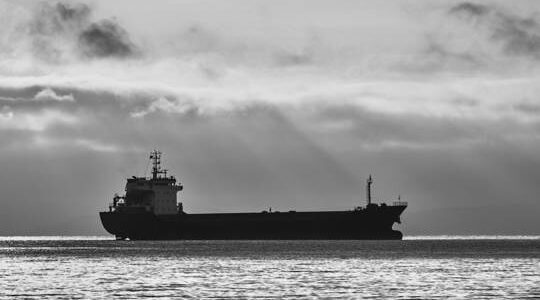
What to know about the Iran war today:Iran’s military announced Saturday that it has resumed control of the Strait of Hormuz. It warned that it would continue to block transit through the strait as long as the U.S. blockade of Iranian ports remained in effect.Two Iranian gunboats fired on a tanker in the strait, the British military said Saturday. India also confirmed two of its ships were targeted in attacks by Iran. “We’re talking to them,” President Trump said Saturday after Iran had shuttered the strait. “They wanted to close up the strait again, as they’ve been doing for years, and they can’t blackmail us.” Israel says one of its soldiers killed in Lebanon
The Israeli military said one of its soldiers has been killed in Lebanon.

The soldier, an officer, was killed in south Lebanon on Friday, the day after the start of a U.S.-brokered ceasefire that has otherwise largely held.
It said two other soldiers were injured in the incident, but didn’t release any more details.

This brings to 14 the number of Israeli soldiers killed in the latest war in Lebanon.
Iran’s parliamentary speaker says there has been progress in U.S. peace talks, but both sides still far apart
Progress had been made in negotiations with the U.S. to end the war, Iran’s parliamentary speaker said on Saturday night, but added the sides were still far from an agreement.
“We are still far from the final discussion,” Mohammad Bagher Ghalibaf, who is also one of Iran’s negotiators, said in a national televised address, adding “we made progress in the negotiations, but there are many gaps and some fundamental points remain.”
Several people familiar with the deliberations told CBS News Friday that the Trump administration could send senior officials back to Pakistan within days for a second round of talks.
Vice President JD Vance led a marathon session of direct talks with Iranian officials last weekend in Islamabad that yielded no immediate results.
Vance “grateful” to Pope Leo over latest remarks seeking to diffuse tensions with White House
Vice President JD Vance said Saturday evening he was “grateful” to Pope Leo for remarks in which the pope appeared to attempt to diffuse tensions with the White House regarding his recent criticisms of the Iran war.
While traveling from Cameroon to Angola Saturday, Leo told reporters that it was not his intention “to debate” President Trump.
“It was looked at as if I was trying to debate, again, the president, which is not in my interest at all,” Leo said.
“I am grateful to Pope Leo for saying this,” Vance, who converted to Catholicism, wrote on social media. “While the media narrative constantly gins up conflict–and yes, real disagreements have happened and will happen–the reality is often much more complicated. Pope Leo preaches the gospel, as he should, and that will inevitably mean he offers his opinions on the moral issues of the day. The President–and the entire administration–work to apply those moral principles in a messy world. He will be in our prayers, and I hope that we’ll be in his.”
The pope’s remarks on the Iran war have become more pointed of late.
“Anyone who is a disciple of Christ, the Prince of Peace, is never on the side of those who once wielded the sword and today drop bombs,” the pope wrote April 10 on social media.
His comments have drawn the ire of Mr. Trump, who told CBS News senior correspondent Norah O’Donnel in an April 13 phone interview that Leo is “wrong on the issues.”
That same day Leo countered that he has “no fear of the Trump administration, or speaking out loudly of the message of the Gospel, which is what I believe I am here to do, what the church is here to do.”
Macron blames Hezbollah for killing of French peacekeeper in Lebanon.
A French soldier was killed and three others wounded in an ambush Saturday on United Nations peacekeepers in Lebanon that French President Emmanuel Macron blamed on Hezbollah, an accusation the Iranian-backed militant group has denied.
“Everything points to Hezbollah being responsible for this attack,” Macron said on X, urging Lebanese authorities to arrest the perpetrators.
U.N. Secretary-General Antonio Guterres condemned the attack in a statement and said an initial assessment by the U.N. Interim Force in Lebanon found it was carried out by Hezbollah.
But Hezbollah denied involvement in the attack that killed the French peacekeeper, identified as Staff Sgt. Florian Montorio.
“Hezbollah denies any connection to the incident that occurred with UNIFIL forces in the Ghandouriyeh-Bint Jbeil area,” it said in a statement.
The group urged “caution in making judgements and assigning responsibilities” pending the results of the Lebanese army’s investigation into the incident.
Saudi Arabia’s foreign ministry issued a statement expressing its “strong condemnation and denunciation of the attack” that killed the French soldier, but stopped short of naming Hezbollah as being responsible.
The fighting in Lebanon has seen UNIFIL deployed there repeatedly targeted, by both Israeli and Hezbollah forces.
Montorio, was caught in an “ambush” as his unit headed to a UNIFIL outpost cut off by fighting and he died from a “direct gunshot,” France’s armed forces minister Catherine Vautrin said on X.
He is the second French soldier to die since the start of the war in the Middle East, after an Iranian-designed drone killed Chief Warrant Officer Arnaud Frion last month in Iraq’s Kurdistan region.
CBS/AFP
Strait of Hormuz “is under Iran’s control,” top Iranian politician reiterates after Iran fires on several ships
Iran’s parliament speaker, Mohammad Bagher Ghalibaf, reiterated that the Strait of Hormuz is under Iranian control.
In a statement released late Saturday local time through Iran’s semi-official Iranian Students News Agency, Ghalibaf said that “the Strait of Hormuz is under Iran’s control.”
“If America does not abandon the blockade, passage through the Strait of Hormuz will certainly be restricted,” Ghalibaf said.
Ghalibaf also alleged that Iran had “decisively confronted” U.S. efforts to clear the strait of mines, calling it a violation of the two-week ceasefire.
This appeared to contradict a Truth Social post from President Trump Friday, in which he said that Iran, with the help of the U.S., “has removed, or is removing, all sea mines!”
The mines are believed to have been placed in the strait by Tehran’s regime after the Iran war began on Feb. 28.
Meanwhile, Indian officials reported that two Indian-flagged ships were fired on in the strait Saturday, while the U.K. Maritime Trade Operations Centre also said that two Iranian Revolutionary Guards gunboats fired on a tanker in the strait as well.
The UKMTO later added that a container ship was damaged in a strike in the strait about 25 nautical miles northeast of Oman, while a commercial vessel was also targeted in a strike three nautical miles east of Oman.
Hezbollah leader says truce can’t be one-sided, vows to respond to Israel attacks
Hezbollah leader Naim Qassem said on Saturday that the ongoing 10-day truce with Israel cannot be one-sided, vowing that his fighters would respond to Israeli attacks on Lebanon.
“A ceasefire means a complete cessation of all hostilities. Because we do not trust this enemy, the resistance fighters will remain in the field with their hands on the trigger, and they will respond to violations accordingly,” Qassem said in a statement read out on TV.
“There is no ceasefire from the side of the resistance only, it must be from both sides.”
Ukraine asks U.S. to reinstate Russian sanctions amid Iran war
Ukraine’s ambassador to the United States asked the Trump administration to reinstate sanctions on Russia amid the Iran war, saying that Moscow “must not be allowed to profit from the actions of its ally.”
“It is in our common interest to limit the funding Russia uses for its attack on Ukraine and for aiding U.S. adversaries,” Olha Stefanishyna said. “If Russia sees that destabilization and fanning the war are beneficial, new problems in the world will not be long in coming.”
The Trump administration has paused sanctions on some Russian oil to ease shortages caused by the Iran war. The pause, called a general license, was first enacted in March, and was extended for 30 days by the U.S. Treasury Department on Friday.
Lindsey Graham calls promises from Iran “worthless”; should put Kharg Island in “crosshairs”
Sen. Lindsey Graham, R-S.C., delivered a stern warning to Iran on Saturday after the country said it was taking back control of the Strait of Hormuz, one day after opening the route to commercial shipping traffic.
“Control the strait. Continue the blockade. Put Kharg island in the crosshairs,” he wrote on X, referring to the island off the Iran coast that processes much of the country’s oil. “Over time, we have all the cards.”
Graham, one of President Trump’s fiercest allies in the Senate, urged the president to continue the military blockade, which has turned back at least 23 ships exiting or entering Iranian ports.
“After Iran’s brazen IRGC-led attack on international shipping and declaration that they’re now in control of the Strait, it is imperative America and the world answer this provocation,” Graham wrote. “The U.S. and others must demonstrate the ability to control the Strait without Iranian interference.”
Trump had insisted during an event in the Oval Office on Saturday that negotiations were going well and he expected to provide a positive update later in the day.
Graham, however, struck directly at the regime, saying, “It’s abundantly clear that after 47 years, promises coming from the Iranian regime are worthless.”
India expresses concern over its tankers targeted in Strait of Hormuz
India has confirmed two of its ships were targeted in earlier attacks by Iran, and India’s foreign secretary has spoken to the Indian ambassador to Iran about their concerns.
“During the meeting, Foreign Secretary conveyed India’s deep concern at the shooting incident earlier today involving two Indian-flagged ships in the Strait of Hormuz,” the Indian Ministry of Foreign Affairs said in a statement. “He noted the importance that India attached to the safety of merchant shipping and mariners and recalled that Iran had earlier facilitated the safe passage of several ships bound for India.”
The foreign secretary, Vikram Misri, said he urged the ambassador to convey India’s concerns to Iran and “resume at the earliest the process of facilitating India-bound ships across the Strait.”
Several vessels were targeted in the Strait of Hormuz on Saturday after Iran said the U.S. naval blockade constituted a violation of the ceasefire and it was again closing the shipping lane.
No one was injured aboard the ships targeted by Iran on Saturday.
Hezbollah fighters struck again by Israeli army
Another group of Hezbollah fighters was struck and killed by the Israeli army on Saturday following similar incidents earlier in the day.
Israel accused the Hezbollah members of approaching a group of Israeli Defense Forces soldiers south of the defense line and thus violating the ceasefire. Israel has said it will still carry out attacks when threatened, despite the ceasefire.
“The terrorists posed a threat to the troops, and in response the IDF eliminated them,” the Israeli army said on X. It’s unclear how many people were killed.
Israel said it also struck a Hezbollah tunnel south of the line, and the Hezbollah members entering the shaft. Israel said it had launched several strikes on Hezbollah south of what it described as a “Yellow Line,” a demarcation similar to the one separating its forces from territory still held by Hamas in Gaza.
Hezbollah disavows deadly attack on UNIFIL soldiers
Hezbollah has issued a statement saying it was not responsible for the attack on a group of French soldiers working for the United Nations Interim Force in Lebanon. One soldier was killed and three others were injured, according to French President Emmanuel Macron.
“Hezbollah denies any connection to the incident involving UNIFIL forces in the al-Ghandouriya-Bint Jbeil area, and calls for caution in assigning blame and responsibility pending the Lebanese Army’s investigation to fully determine the circumstances of the incident,” the Iranian-backed group said.
Macron had earlier said, “Everything suggests that responsibility for this attack lies with Hezbollah.”
The Lebanese army said seven Lebanese civilians and one Palestinian had been arrested for firing weapons in the air and possessing unlicensed military weapons, though a search was still ongoing for remaining shooters involved in the alleged attack.
Iranian officials criticize Trump, U.S. amid negotiations
While President Trump said negotiations were “going very well” on Saturday, the same message does not seem to be coming from the Iranian side.
“Trump’s policies are a blend of delusion and contradictory rhetoric, and his tweets are worthless,” Iranian First Vice President Mohammad Reza Aref posted on X, translated from Persian. “Our response, however, lies not in words, but in the ‘glory of the battlefield’; breaking the alleged maritime siege and a two- to threefold surge in oil exports in this very period are signs of Iran’s decisive victory.”
“The authority of this nation will not be tarnished by ravings” he concluded, at about the same time Mr. Trump was holding a press conference at the White House.
Meanwhile, Mohammad Bagher Zolghadr, the secretary of Iran’s Supreme National Security Council, issued an update on the state of negotiations, saying Iran had received new proposals from the U.S., via Pakistani intermediaries, which they were “currently reviewing.”
Zolghadr reiterated that Iran should “maintain oversight and control” over the Strait of Hormuz and collect from ships “the payment of relevant fees for services related to security, safety, and environmental protection, along routes designated by Iran.”
“Furthermore, as long as the enemy seeks to disrupt maritime traffic and employ measures such as a naval blockade, the Islamic Republic of Iran will consider this a violation of the ceasefire and will prevent the conditional and limited opening of the Strait of Hormuz,” the secretary said in the statement.
Iran’s record-setting internet blackout reaches 50th day, monitor says
The monitoring organization NetBlocks said that the internet blackout imposed by Iranian authorities at the start of the war in the Middle East has entered an “unprecedented” 50th day.
“Metrics show the measure, unprecedented for a connected society, continues to the detriment of most Iranians’ livelihoods and human rights,” NetBlocks said on X. The monitor said the outage has lasted 1,176 hours.
The blackout was already the longest nationwide shutdown on record as of April 5, according to NetBlocks.
Iran’s extremely restricted local intranet has been working throughout the war, enabling people to connect to domestic websites. To connect to the global web for news or to banned social media networks such as Instagram, some resort to virtual private networks (VPNs) to disguise their IP addresses in rare moments when network bandwidth is available. Far more limited numbers of people have access to Starlink or other satellite-based internet providers, which are also banned.
Iranians suspected of using VPNs since the war began have received text messages warning them of arrest or imprisonment.
Trump says conversations with Iran are “going very well”
President Trump said the U.S. is having “very good conversations” with Iranian leaders during a news conference in the Oval Office on Saturday morning.
“It’s going very well,” Mr. Trump said. He offered no specifics, but added the U.S. is “taking a tough stand” in conversations with Iran.
“We’re talking to them. They wanted to close up the strait again, as they’ve been doing for years, and they can’t blackmail us,” Mr. Trump said. He did not mention Iranian claims that the Strait of Hormuz was closed again Saturday or address reports of strikes on ships in the vital waterway.
Mr. Trump repeated his claims that Iran has no navy, air force or leadership. He said the country has undergone “enforced regime change” after strikes targeting leaders.
More ships appear to come under fire in Strait of Hormuz
Two more incidents involving apparent attacks on ships in the Strait of Hormuz have been reported, according to the United Kingdom Maritime Trade Operations Centre.
The first report involved a container ship 25 nautical miles northeast from Oman, which was struck by an unknown projectile, according to the UKMTO. The unnamed vessel reported damage to some of the containers, but no fire or environmental impact.
About 45 minutes later, the master of an unnamed cruise ship 3 nautical miles east of Oman reported “sighting a splash in close proximity of the vessel,” according to the UKMTO.
French soldier from U.N. force dies in attack in Lebanon
A French member of the United Nations Interim Force in Lebanon, or UNIFIL, was killed during an attack on Saturday in the southern part of the country, according to French President Emmanuel Macron.
The soldier was identified as Florian Montorio of the 17th Parachute Engineer Regiment. Macron said three other UNIFIL members were wounded in the attack.
“Everything suggests that responsibility for this attack lies with Hezbollah,” Macron said on X, translated from French. “France demands that the Lebanese authorities immediately arrest the perpetrators and take their responsibilities alongside UNIFIL.”
The UNIFIL, which was put in place following Israel’s invasion of Lebanon in 1978, is a U.N. peacekeeping force made up of soldiers from dozens of U.N. countries assigned to patrol southern Lebanon. Montorio is the fourth member of the force to be killed this year; three Indonesian members were killed last month.
Lebanese President Joseph Aoun spoke to Macron by phone to apologize for the attack, according to the Lebanon president’s office.
“[Aoun] stressed that Lebanon, which categorically rejects any attack on UNIFIL, is committed to ensuring the safety of these forces and creating the appropriate conditions for them to carry out their mission,” the statement said. “He said he has issued instructions to the relevant agencies to conduct an immediate investigation into the incident and determine responsibility, underlining that Lebanon will not tolerate leniency in pursuing those involved and bringing them to justice.”
U.S. blockade has forced 23 ships to turn around
Even as some confusion reins over whether the Strait of Hormuz is open to shipping traffic, the U.S. blockade on ships entering and exiting Iranian ports continues.
Twenty-three ships have now been forced to turn around at the behest of U.S. forces in the Gulf of Oman, according to the U.S. Central Command on Saturday. That is an increase from 21 ships about 12 hours ago.
President Trump said the blockade will remain in place until Iran and the U.S. agree to a final deal to end the war.
Littoral combat ship USS Canberra (LCS 30) patrols the Arabian Sea during the U.S. blockade. Since commencement of the blockade, 23 ships have complied with direction from U.S. forces to turn around. American forces are enforcing a maritime blockade against ships entering or… pic.twitter.com/PMIBOoeJXS
— U.S. Central Command (@CENTCOM) April 18, 2026 IDF says it has established a “Yellow Line” in Lebanon
The Israeli military said Saturday it had established a “Yellow Line” demarcation in southern Lebanon, similar to the one separating its forces from territory still held by Hamas in Gaza, adding that it had already struck suspected militants approaching its troops along the line.
“Over the past 24 hours, IDF forces operating south of the Yellow Line in southern Lebanon identified terrorists who violated the ceasefire understandings and approached the forces from north of the Yellow Line in a manner that posed an immediate threat,” the military said, referring to such a line for the first time since a ceasefire came into effect.
“Immediately after identification and in order to eliminate the threat … forces attacked the terrorists in several areas in southern Lebanon,” it said, noting that the military was authorised to take action against threats, despite the ceasefire.
Iranian gunboats fire on tanker, British military says
Two Iranian gunboats have fired on a tanker in the Strait of Hormuz, the British military said Saturday.
The United Kingdom Maritime Trade Operations center said the tanker and crew were reported safe, without identifying the vessel or its destination.
Egypt and Pakistan are working “very hard” on peace deal, minister says
Egypt and Pakistan are working “very hard” as mediators to bring about “a final agreement between the United States and Iran,” Egyptian foreign minister Badr Abdelatty said Saturday as he attended an Antalya Diplomacy Forum in Turkey.
Abdelatty said the countries hoped to reach an agreement “in the coming days.”
“Not only us in the region, but the whole world is suffering from the continuation of this war,” Abdelatty said, adding that mediators are “pushing very hard in order to move forward.”
Iran reimposes restrictions on Strait of Hormuz
Iran swiftly reversed course on reopening the Strait of Hormuz, reimposing restrictions on the critical waterway on Saturday after the U.S. said the move would not end its blockade.
The country’s joint military command said on Saturday that it “control of the Strait of Hormuz has returned to its previous state … under strict management and control of the armed forces.” It warned that it would continue to block transit through the strait as long as the U.S. blockade of Iranian ports remained in effect.
The announcement came the morning after President Trump said the American blockade “will remain in full force” until Tehran reaches a deal with the U.S., including on its nuclear program.
Trump says U.S. blockade will remain in place even if ceasefire ends
Speaking to reporters aboard Air Force One late Friday night, President Trump indicated that the U.S. blockade of Iranian ports will remain in place even if the current ceasefire deal with Iran expires next week.
“Maybe I won’t extend it,” Mr. Trump said of the two-week ceasefire with Iran. “But the blockade is going to remain. But maybe I won’t extend it, so you have a blockade, and unfortunately, we’ll have to start dropping bombs again.”
Without an extension or a permanent peace agreement, the ceasefire deal, which began April 8, is slated to expire on Wednesday, April 22.
U.S. Central Command says the blockade, which began Monday, has forced 21 ships to turn around and return to Iran.
Trump says China’s Xi is “very happy” Strait of Hormuz is open
President Trump alleged in a social media post late Friday night that Chinese President Xi Jinping is “very happy that the Strait of Hormuz is open and/or rapidly opening.”
The president said that his trip to China, scheduled for next month, “will be a special one and, potentially, Historic. I look forward to being with President Xi — Much will be accomplished!”
China’s Foreign Minister Wang Yi in a phone call Thursday told Iranian Foreign Minister Abbas Araghchi that “working to resume normal passage of the strait is a unanimous call from the international community.”
Almost 20% of China’s oil comes from Iran, and more than half its overall energy supplies come via the Strait of Hormuz.
Mr. Trump’s trip to China, originally scheduled for early April, was delayed to mid-May because of the Iran War.
Mr. Trump’s remarks come after multiple U.S. officials familiar with the matter confirmed to CBS News that U.S. intelligence assessed China was considering whether to provide Tehran with advanced radar systems after the Iran war broke out.
G20 members asked U.S. to extend sanctions waiver for Russian oil, source says
G20 member states had requested the new sanctions waiver for seaborne Russian oil that was issued by the Trump administration on Friday, a source familiar with the matter who was not authorized to speak on the record told CBS News — a move designed to ease pressure on oil prices.
Last month, the U.S. issued a license that let countries buy Russian oil that had already been loaded onto ships without facing onerous U.S. sanctions. That measure expired last weekend, and Treasury Secretary Scott Bessent told reporters Wednesday the administration would not renew it.
But one day later, at a gathering of G20 finance ministers on the sidelines of an International Monetary Fund and World Bank meeting on Thursday, member states asked for an extension, the source said.
The G20 includes several countries that are heavily reliant on Middle Eastern oil and are struggling with high prices and supply constraints due to the war with Iran.
The extension expires in about one month, and it only applies to oil that was seaborne as of Friday morning.
“As negotiations accelerate, Treasury wants to ensure oil is available to those who need it,” a Treasury spokesperson said.
21 ships turned around since U.S. blockade on Iranian ports began, CENTCOM says
The U.S. military has forced 21 ships to turn around since it began its blockade of Iranian ports, U.S. Central Command said Friday.
Since the blockade got underway Monday, “21 ships have complied with direction from U.S. forces to turn around and return to Iran,” CENTCOM, which oversees U.S. military operations in the Middle East, said in a social media post.
Iran announced early Friday that the Strait of Hormuz would be “completely open” to commercial vessels following the announcement of a 10-day ceasefire deal between Israel and Lebanon. However, President Trump later said that the U.S. blockade of Iranian ports would continue until a permanent peace deal is reached with Iran.
“THE NAVAL BLOCKADE WILL REMAIN IN FULL FORCE AND EFFECT AS IT PERTAINS TO IRAN, ONLY, UNTIL SUCH TIME AS OUR TRANSACTION WITH IRAN IS 100% COMPLETE,” Mr. Trump wrote in a Truth Social post. “THIS PROCESS SHOULD GO VERY QUICKLY IN THAT MOST OF THE POINTS ARE ALREADY NEGOTIATED.”
Trump administration again allows purchases of Russian oil at sea without sanctions
For the second time since the war with Iran began, the U.S. Treasury has greenlit the purchase of Russian oil that is already at sea, as the Trump administration grapples with tight oil markets.
The license allows oil buyers to avoid many of the U.S.’s heavy sanctions on Russia. It only applies to oil that had been loaded onto ships as of Friday morning, and expires on May 16.
The U.S. offered similar relief for Russian oil that was already at sea last month, but it expired last weekend. A sanctions license for Iranian oil at sea is set to expire on Sunday. It does not apply to transactions involving people located in the parts of Ukraine that are occupied by Russia, or people in Cuba, Iran or North Korea.
Treasury Secretary Scott Bessent had told reporters earlier this week the administration would not renew last month’s licenses on Russian and Iranian oil, saying, “that was oil that was on the water prior to March 11th, so all that has been used.”
A Treasury spokesperson told CBS News: “As negotiations accelerate, Treasury wants to ensure oil is available to those who need it.”
The Trump administration has argued that these sanctions licenses have eased some of the pressure on oil prices caused by the Iran war. Bessent estimated this week that Russia may have made about $2 billion from last month’s sanctions waiver, but he argued that the country would have made even more if oil prices had crept up higher.
Congressional Democrats have strongly criticized the sanctions waivers, arguing that they could offer financial relief to Russian President Vladimir Putin and undermine sanctions that were designed to make it harder for Russia to fund its war with Ukraine.
Here’s what we saw when we took a boat into the Strait of Hormuz
It took weeks of planning to find a way into the Strait of Hormuz.
We studied maps. Talked through scenarios. How we would get in. How we would get out. Who we could call if something went wrong. And what would happen if we ran into trouble along the way.
Our plan was to reach one of the strait’s narrowest points. Close enough to see, for ourselves, the oil tankers and cargo ships that had been backing up there for weeks.
When a ceasefire between the United States, Israel, and Iran, brokered by Pakistan, came into effect, we made the call. The first round of talks in Islamabad had failed. But the truce was largely holding, and for a moment, the risk felt manageable.
We crossed from one Gulf country into another and eventually found ourselves on a coastal road that felt almost too beautiful for the tensions that lay just offshore.
On one side were jagged mountains rising straight out of the earth, completely bare of vegetation. On the other, clear blue water stretched out into the Gulf.
And then, as the road curved, we saw the ships. Not one or two, but dozens. Sitting still. Waiting.
Credit: Yahoo News