
What to know about the Iran war today:
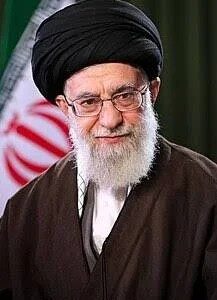
Qatari and Pakistani mediators said Thursday that the next meetings between Iranian and U.S. negotiators would be scheduled “at the earliest possible time” after funeral commemorations for Iran’s former supreme leader. Ayatollah Ali Khamenei was killed in U.S.-Israeli strikes on Feb. 28, and his funeral is to last from July 4 until July 9. Iran’s chief negotiator on Thursday called on Iranians to avenge Khamenei’s killing by coming out en masse for funeral events. Iranian authorities say 15-20 million people and representatives from 30 countries are expected to attend.President Trump said there was progress Wednesday as U.S. and Iranian officials resumed talks in Doha, via mediators, telling reporters “the denuclearization of Iran is moving along well.” Qatar and Pakistan also say “positive progress was made.”
Body of supreme leader arrives at Tehran religious complex for funeral
The body of Iran’s Supreme Leader Ali Khamenei, who was killed in U.S.-Israeli strikes in February, arrived at Tehran’s Grand Mosalla religious complex ahead of his funeral, state media reported early Friday local time.

“The body of the martyred Leader of the Islamic Revolution has arrived at the Imam Khomeini Grand Mosalla,” IRNA wrote on Telegram, using the complex’s official name.
It remains unknown if Khamenei’s son and successor Mojtaba Khamenei, who has not been seen in public since becoming supreme leader, will be present.

Peace talks between the U.S. and Iran have been paused for Khamenei’s funeral.
Trump: “This is not a war per se. This is the de-nuking of Iran.”
While discussing the war with Iran in a CNBC interview, President Trump said: “This is not a war per se. This is the de-nuking of Iran.”
At various points in recent months, Mr. Trump has avoided calling the conflict with Iran a war.
He also said of negotiations with Iran, “I think they’ve agreed to just about everything we need.”
Mr. Trump’s stated goal is to prevent Iran from obtaining a nuclear weapon, but the exact contours of any potential nuclear deal with Iran remain unclear. The president has said he wants Iran to give up all uranium enrichment, an ask that Iran has rejected in the past.
Iranian foreign minister implies U.S. Central Command has destabilized region
The foreign minister of Iran criticized the presence of the U.S. military in the region and said it was contributing to the region being left secure.
Araghchi was replying to a post from CENTCOM on X discussing the meeting between Central Command Adm. Brad Cooper and senior military officials from Bahrain, Egypt, Jordan, Kuwait, Lebanon, Oman, Qatar, Saudi Arabia, Syria, the United Arab Emirates, and Yemen.
The headline on the U.S. post read: “CENTCOM Leads Regional Security Dialogue with 12 Nations in Bahrain.”
The comments from Araghchi, one of the top Iranian officials involved in the negotiations between the U.S. and Iran about a lasting peace, could be a sign talks are not going particularly well.
“Peace in our region can only be sustained when comprehensive and inclusive, with no outside interference,” Araghchi added in his post.
Ship traffic in Strait of Hormuz continues to rebound, experts say
At least 258 ships transited the waterway last week, a period that included Iranian strikes on two commercial vessels, according to marine data and analysis company Lloyd’s List Intelligence. That’s up from 138 ships the previous week.
Traffic has slowed since the Iranian strikes on June 25 and 27. At least 80 more ships passed the strait Monday through Wednesday, according to Lloyd’s and shipping data and analysis firm Windward.
Iran’s attacks “seem to have been forgotten,” Richard Meade, editor-in-chief at Lloyd’s, said Thursday during a webinar.
Ship traffic in the strait remains far below levels seen before the war, when about 130 vessels passed through daily.
U.S. should respect Iran’s authority over Strait of Hormuz, Iranian deputy parliament speaker says
The debate over who will control the Strait of Hormuz continues to prove problematic for a lasting peace between the U.S. and Iran.
Hamidreza Haji-Babai, deputy speaker of Iran’s parliament, said on Thursday the U.S. should respect Iran’s authority over the strait.
“The Strait of Hormuz is a symbol of the Islamic Republic of Iran’s authority, and the United States must respect the power of the Islamic Revolutionary Guard Corps in this strategic waterway,” he told the state-owned IRNA news agency.
The U.S. has repeatedly said Iran will not be allowed to charge tolls for use of the waterway. Oman, a U.S. ally, which has said it does not support tolls, began negotiations Monday with Iran about how to handle administration of the strait going forward.
Down-blending Iran’s highly enriched uranium “is not a solution,” analyst says
Down-blending Iran’s stockpile of about 900 pounds of highly enriched uranium, which will make it not as close to weapons grade, is listed as a “minimum methodology” to resolve that point in the Iran-U.S. memorandum of understanding.
The highly enriched uranium is believed by U.N. experts to be buried under Iran’s Isfahan nuclear facility, which was severely damaged by U.S. strikes in June 2025, so reaching it will be complicated.
If and when experts do access the material, Spencer Faragasso, a senior research fellow at the Institute for Science and International Security, said “down-blending the enriched material is not a solution” for the U.S.
“While it sets Iran back, it still leaves them with a long-term path to a nuclear weapons capability,” he said. “Removing all the enriched uranium from Iran is the only concrete solution, but we haven’t observed Iran concede on that point.”
Faragasso said there has been “no indication that major concessions by Iran on its nuclear program have been made.”
“We have observed continued construction at Pickaxe Mountain, a nuclear facility under construction just south of Natanz, which indicates that Iran is progressing with its plans at the facility and possibly using this future facility as a hedge in case negotiations collapse,” he said. “The facility is likely large enough to hold an enrichment plant.”
Meanwhile, he added, “Iran is currently earning potentially billions of dollars from its oil exports from waivers granted by the U.S. government.”
“It desperately needs this money to fill its coffers, rebuild its war industry, finance state security forces, and provide a much-needed cash injection to its proxy forces,” he said.
Credit: Yahoo News