

Mr Malami and others’ objection to EFCC’s request for an order of final forfeiture, the judge held that the issue before the court was not “who owns the property, but how legitimate are the funds used to acquire the properties.”
The Federal High Court in Abuja on Wednesday ordered the final forfeiture of 48 properties linked to former Attorney General of the Federation and Minister of Justice, Abubakar Malami.
Judge Joyce Abdulmalik granted the forfeiture application by the Economic and Financial Crimes Commission (EFCC), holding that Mr Malami and others laying claim to the assets failed to prove they lawfully acquired them.
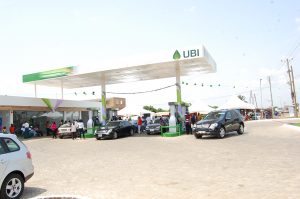
The properties, worth N180.4 billion, by PREMIUM TIMES’ calculation based on the values the EFCC attached to each, include hotels, a university, malls, corporate entities, residential houses scattered in Abuja, Kaduna, Kano and Birnin-Kebbi, the capital of Kebbi State from where Mr Malami hails.
However, Judge Abdulmalik released only nine out of the 57 assets the EFCC presented for final forfeiture.

The judge said the EFCC did not convincingly prove that the nine assets were illegitimately acquired.
EFCC instituted forfeiture proceedings in January against 57 assets worth more than N212 billion, alleging Mr Malami acquired them with proceeds of unlawful activities while serving as AGF between 2015 and 2023.
The court, presided over by another judge, issued an interim forfeiture order against all 57 properties in January.
Mr Malami and 14 others – including his family members, his university, hotels and corporate entities affected by the ruling – filed processes to challenge the interim order, maintaining that they had legitimately acquired the assets.
The former minister’s family members among the challengers are his sons, Abdulaziz and Abiru, and his wife, Ms Bashir.
The challengers also include Rayhaan Bustan and Agro Allied Ltd, Moutain View Gold and Jewellery Ltd, Amasdul Oil and Gas Limited, Azbir Arena Nigeria Ltd, Meethaq Hotels Ltd, Rayhaan University Ltd/GTE, Rayhaan Hotels Ltd and Zeenoor Hotels Ltd.
The rest are Kwasar Ben of Brahim, Mutkataka Usman Junju and Real Edge Agro Services.
‘No proof of legitimate acquisition’
Ms Abdulmalik ruled that the issue before the court was not “who owns the property, but how legitimate are the funds used to acquire the properties.”
According to the judge, the respondents had “not dislodged the reasonable suspicion that the property was acquired by unlawful activities.”
Relying principally on Section 17 of the Advance Fee Fraud and Other Fraud Related Offences Act to grant the final forfeiture order, the judge held that Mr Malami and his co-respondents failed to “rebut the reasonable suspicion” that the properties were acquired through unlawful activities.
‘Earnings failed to match acquisitions’
The judge said the evidence before the court showed that Mr Malami earned N89.7 million (N89,664,000) as salary while serving as minister between 2015 and 2023.
She added that he received N12 million (N12,158,400) as severance allowance at the end of his tenure.
The judge also noted that Mr Malami declared N253.6 million (N253,608,500) as official earnings in an addendum to his asset declaration submitted to the Code of Conduct Bureau in a letter dated 16 June 2023.
The judge said the evidence showed that Mr Malami, while acting as guarantor to Raywan Retails Ltd for a Zenith Bank facility, declared before a notary public on 10 September 2020 that his personal assets were N41 million and his monthly net income after expenses was N397,000.
She also considered evidence relating to companies under the Raywan Group of Companies, noting that several of the companies were incorporated during Mr Malami’s tenure as minister between 2015 and 2023.
The respondents had challenged the valuation reports relied upon by the EFCC, arguing that they were inaccurate.
Final forfeifure in the absence of credible counter-evidence
But Judge Abdulmalik rejected the respondents’ argument, holding that valuation was “not based on any mathematical certainty” because different valuers could arrive at different figures.
She held that Section 17 of the Advance Fee Fraud and Other Fraud Related Offences Act does not make the production of valuation reports a requirement before a court can grant interim or final forfeiture orders.
“The relevant statutory threshold remains the existence of reasonable suspicion,” the judge held.
The respondents had also argued that there was no concluded criminal charge against Mr Malami.
Judge Abdulmalik held that forfeiture proceedings under Section 17(6) of the Act do not depend on a criminal conviction or the filing of criminal charges.
She held that such proceedings are targeted at the property and not the owner.
The judge also rejected the respondents’ explanation regarding the alleged loan used to acquire some of the properties.
She held that there was no evidence showing “a traceable repayment history” linked to lawful income, business records or legitimate financial transactions.
She said, “Although the properties stand and exist, the question remains: From what source were they acquired?”
“In view of the material placed before the court, I find that the applicant acted in accordance with the law in conducting its investigation of the first respondent,” she held.
She added that “in the absence of any evidence in answer to show lawful source of payments,” the EFCC had established a prima facie case that the 48 properties were proceeds of unlawful activities.
Forfeited assets
She therefore ordered the final forfeiture of properties numbered 1 to 40, 43 to 46, 53, 54, 55 and 57 on the schedule attached to the EFCC’s application to the Federal Government of Nigeria.
According to the EFCC’s application listing the properties and their values, which PREMIUM TIMES reviewed, the 48 forfeited properties were valued at about N180.4 billion.
The nine properties the judge released are valued at about N28.7 billion.
The final forfeiture does not amount to criminal conviction or guilt of anyone, as Mr Malami, his wife and son are jointly facing charges some of which involve illegitimate acquisition of funds with suspicious origins.
Nine assets released from forfeiture. Why?
The court excluded nine properties from the final forfeiture order.
The judge held that the nine assets were not proven liable for final forfeiture.
She said the EFCC failed to establish a clear link between the nine properties and unlawful activities.
She found that suspicion alone was insufficient, ownership explanations were not disproved, and mere association or proximity to another person could not justify forfeiture.
Some of the properties were said to be owned by Mr Malami, linked to or inherited by him before he came to office. His family members claimed that others belonged to them.
EFCC argued that it sought the forfeiture of properties linked to Mr Malami because they underwent remarkable expansion and improvement during his tenure in office. But the judge said that argument was insufficient to tag the assets as proceeds of unlawful activities.
The released assets include schools numbered 41, 42 and 47 on EFCC’s schedule: Rayhaan Model Academy, Rayhaan Primary and Secondary School, and the Malami Support Organisation Building.
Other properties also excluded from the order include Property Nos. 48, 50, 51, 52, 56 and 57.
They are Kadi Malami Foundation Building, Abubakar Malami SAN’s House behind Mobil, Abdulaziz Malami’s House at Gesse Phase II, Birnin Kebbi, Abiru-Rahman Malami’s House at Gesse Phase II, Birnin Kebbi, Rayhaan Hotel Kano and Rayhaan Gym Kano House.
Backstory
The EFCC instituted the civil forfeiture proceedings in January, seeking the permanent forfeiture of 57 properties valued at N212.8 billion, which it alleged were proceeds of unlawful activities linked to former Attorney General of the Federation and Minister of Justice, Abubakar Malami.
On 16 January, during the Federal High Court’s annual vacation, vacation judge Emeka Nwite granted an interim forfeiture order over the properties. He also directed the EFCC to publish the order in a national newspaper for anyone with an interest in the assets to appear before the court and show cause why they should not be permanently forfeited to the Federal Government. The properties are located in Abuja, Kano, Kebbi and Kaduna states.
Following the publication, Mr Malami, his wife, Nana Hadiza Malami, his son, Abdulaziz Abubakar Malami, and several companies linked to the properties filed objections.
They urged the court to dismiss the EFCC’s application and set aside the interim forfeiture order, arguing that it was wrongly granted.
They also argued that the properties were lawfully acquired and that the EFCC failed to establish any connection between the assets and any unlawful activity.
The respondents further argued that the EFCC relied on speculation rather than credible evidence.
They maintained that the commission neither proved that the properties were proceeds of crime nor identified any specific criminal offence from which the assets were derived.
After the Federal High Court resumed from its annual vacation, the case was reassigned to Judge Abdulmalik for hearing and determination.
At the hearing, the EFCC maintained that its investigation showed the properties were acquired with proceeds of unlawful activities and held in the names of individuals and companies acting as fronts for Mr Malami. The commission urged the court to make the interim forfeiture order final.
The EFCC also argued that, under the law, it only needed to establish “reasonable suspicion” and not prove its case “beyond reasonable doubt.”
In late May, both sides adopted their final written addresses, after which Judge Abdulmalik reserved judgment.
The court initially fixed 6 July for judgment. It later postponed the decision twice before delivering its ruling on Wednesday.
Mr Malami, his wife and son are jointly facing trial on N8.7 billion money laundering charges.
Wednesday’s proceedings
The judge began sitting at 9 a.m. and delivered the decision around 2 p.m.
She did not hear any other matter on Wednesday, as the remaining cases before her were already adjourned before she resumed sitting.
During the ruling, Judge Abdulmalik apologised for the series of adjournments in the matter.
She said the delay resulted from the number of applications filed in the matter and that she needed to carefully consider them to avoid mistakes.
LIST OF FORFEITED PROPERTIES
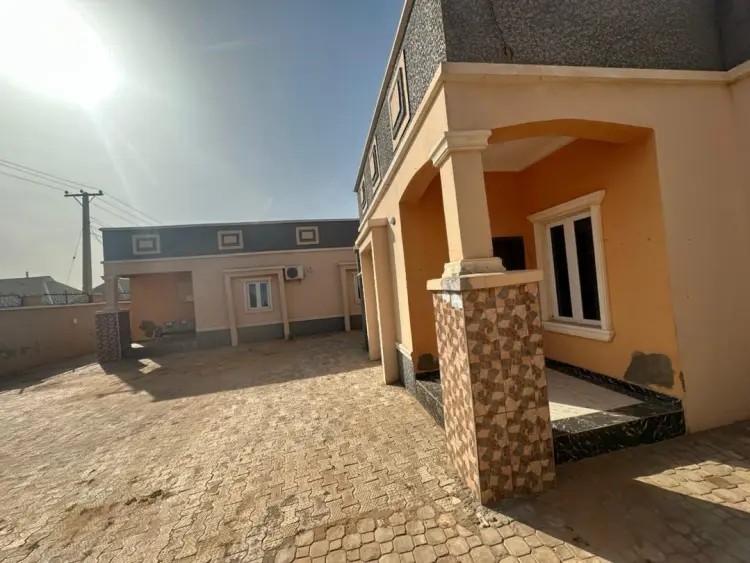
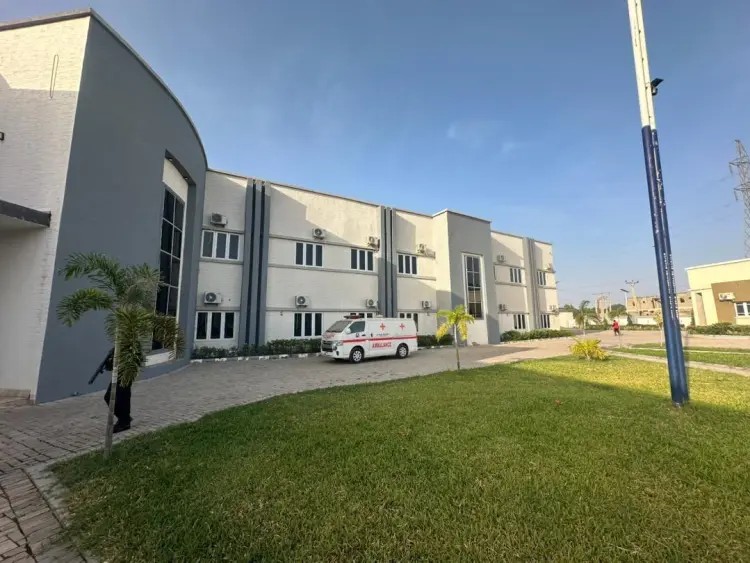
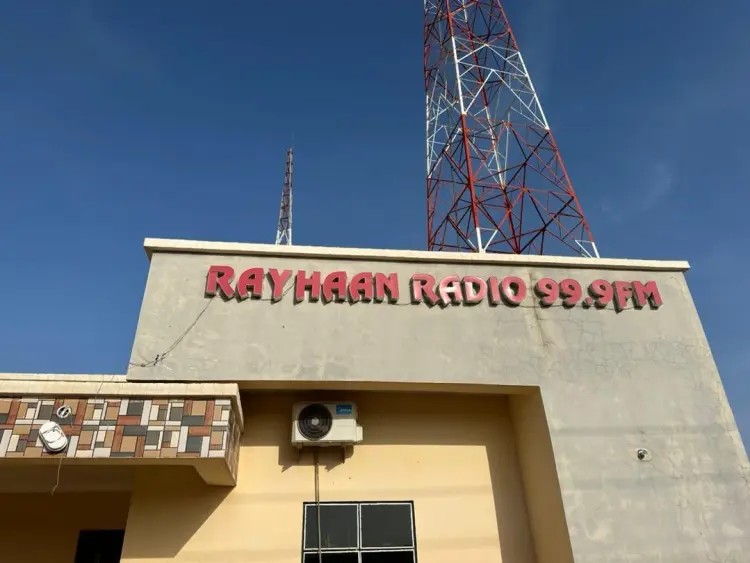
The forfeited assets include residential buildings, commercial properties, hotels, lands and business facilities located in Abuja, Kano, Kaduna and Kebbi states.
They are as follows:
Property No. 1: A luxury duplex at Amazon Street, Plot No. 3011, Cadastral Zone A06, Maitama District, Abuja.
Property No. 2: A two-winged large three-storey building at No. 3 Onitsha Crescent, Area 11, Garki, Abuja, formerly Harmonia Hotels Ltd.
Property No. 3: Plot 683, Jabi District, Abuja, comprising a five-storey building now known as Meethaq Hotels Ltd, Jabi, with 53 rooms and suites.
Property No. 4: Property No. 3130 within Cadastral Zone A04, Asokoro District, Abuja, comprising terraces.
Property No. 5: Property No. 3 Rhine Street, Maitama, Abuja, operated as Meethaq Hotels Ltd, with 15 rooms.
Property No. 6: Plot No. 1241B, Asokoro District, Abuja, also known as No. 11A Yakubu Gowon Crescent.
Property No. 7: Shop No. C52, Cityscape, Shariff Plaza, Plot 739, Cadastral Zone A07, Abuja.
Property No. 8: A property at Aminu Kano Crescent, Wuse II, Abuja.
Property No. 9: No. 4 Ahmadu Bello Way, Nasarawa GRA, Kano.
Property No. 10: A plaza containing commercial toilets, laundering facilities, a warehouse, and tanks adjacent to Birnin Kebbi Market.
Property No. 11: 100 hectares of land along Birnin Kebbi–Jega Road.
Property No. 12: A four-bedroom bungalow at Gesse Phase II, Birnin Kebbi.
Property No. 13: Shops Nos. A36 and B3, Vegas Mall, Wuse II, Abuja.
Property No. 14: No. 26 Babbi Drive, BUA Estate, Abuja.
Property No. 15: No. 27 EFAB Estate, Fifth Avenue, 59th Crescent, Gwarimpa, Abuja.
Property No.16: A four-bedroom bungalow with two-room boys’ quarters at No. 10B Doka Crescent, Abakpa GRA, Kaduna.
Property No. 17: Plot No. 13, Ipent 7 Estate, Karsana District, Abuja.
Property No. 18: A four-bedroom duplex with boys’ quarters at No. 12 Yalinga Street, Wuse II, Abuja.
Property No. 19: Two warehouse shops, B40 and B46, Wuse Market, Abuja.
Property No. 20: A twin houses at Zone E Apo Legislative Quarters, Gudu District, Abuja.
The court also ordered the forfeiture of the remaining properties listed as Nos. 21 to 40, 43 to 46, 53, 54, 55 and 57 in the schedule of properties.
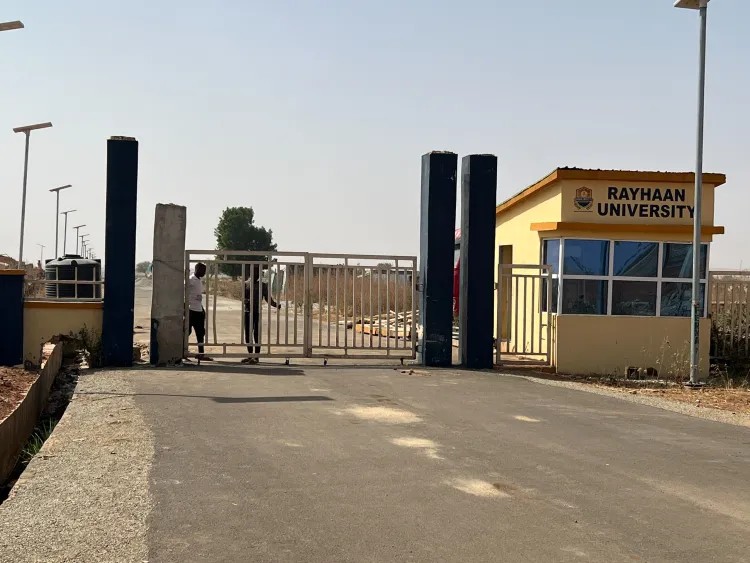
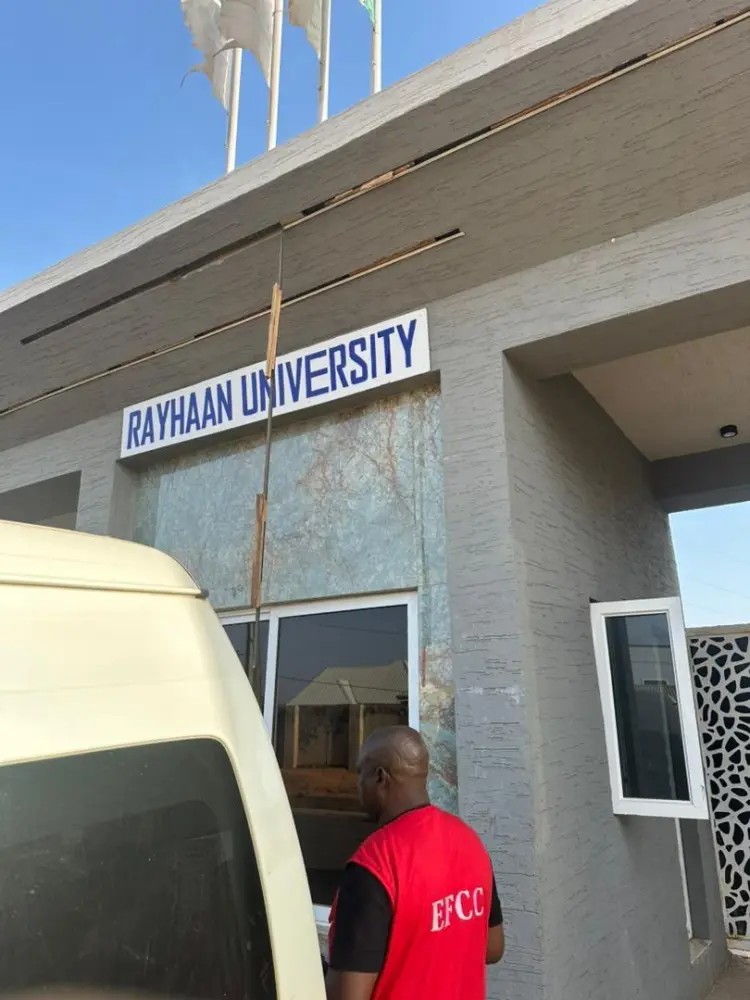
These include Rayhaan University permanent site, Rayhaan University temporary site, Rayhaan University third site, Rayhaan University Vice Chancellor’s House, Rayhaan Agro Allied Factory buildings, factory machines and plants, and Rayhaan Mill Staff Quarters.
Others are Rayhaan Bustan Building, Azbir Hotel, Printing Press, Gallery, Gardens, Mosque, Azbir Clothing, Azbir Pharmacy and Supermarket, Al-Afiya Energy Tanker Garage, Zeennoor Hotel assets, Zeennoor Mosque and Zeennoor Old Hotel Building.
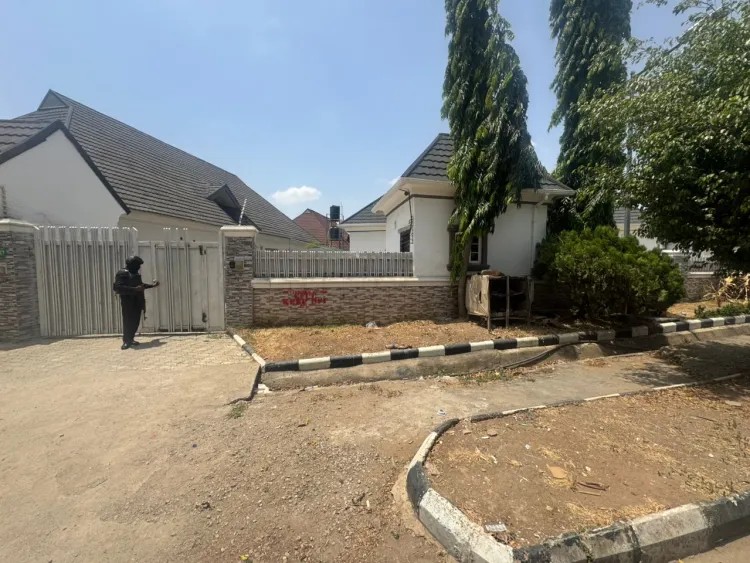
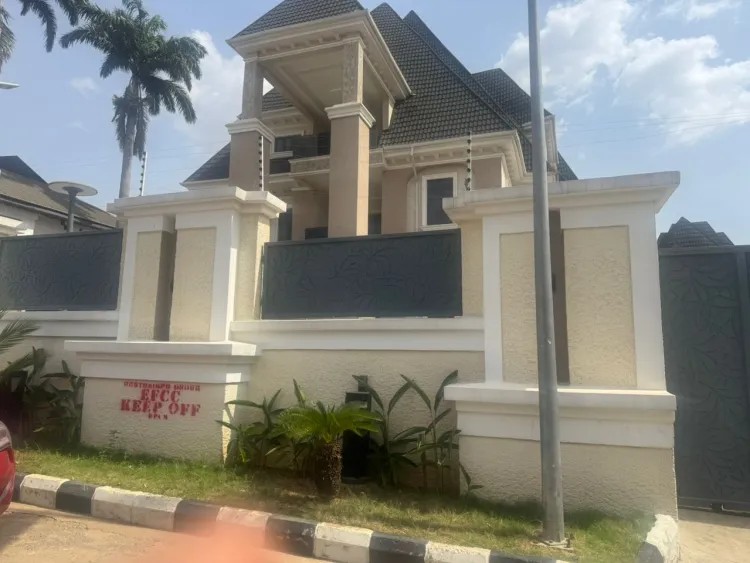

And many more … pictures
Credit: Premium Times