

By Uzo Ugwunze

The HND-BSc dichotomy is a long-standing, structural discrimination in Nigeria’s education and labor sectors that disadvantages Higher National Diploma (HND) holders from polytechnics compared to university-educated Bachelor of Science (BSc) holders. It involves unequal hiring levels, lower career advancement caps (GL 14 max), and restrictions in pursuing postgraduate studies without a Postgraduate Diploma (PGD.
Academic Staff Union of Polytechnics Federal Polytechnics ASUP, Oko, Chapter during the Official Opening of their New Secretariat/ASUP OKO 2026 International (Hybrid) Conference themed ‘Recalibrating Polytechnic Education for Sustainable Development ‘ explored ways to rejig Polytechnic Education to be at par with University Education towards national development.

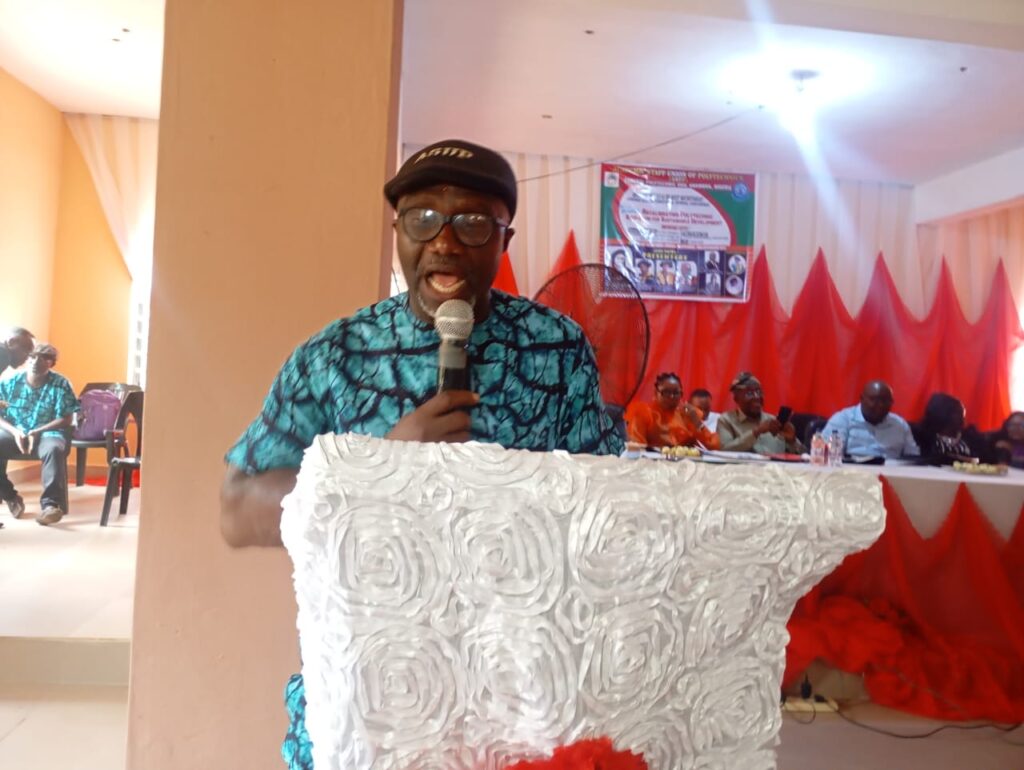
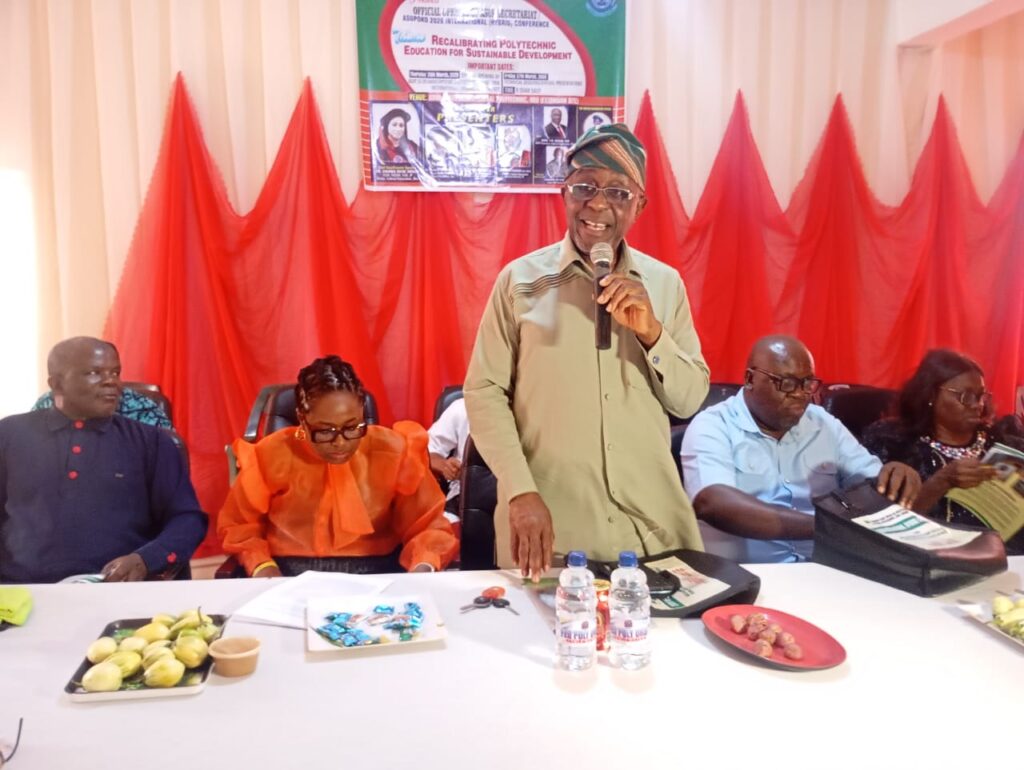
Presenting his address ASUP Chairman, Federal Polytechnic Oko, Barr Fidelis Odua PHD stated that the hybrid conference was another opportunity for guests Lecturers and internal Lecturers to brainstorm and cross fertilize ideas on the now and future of the Polytechnic education vis a vis the avalanche of nerve bursting challenges suffocating the Polytechnic Education in Nigeria.
“The truth still remains that there are many things to the disadvantage of Polytechnics education in Nigeria.
“For instance there is this dichotomy between HND holders and BSc holders.
At the employment market, most people would prefer people with BSc.
In respect of funding there is low funding for Polytechnics education.
“What we are looking at in this conference is a situation whereby those things that are in the negative in respect of the Polytechnics education should be looked into and readdressed so as to now pave way for equal opportunities between Polytechnic Education and University Education, to bring Polytechnics education where it should be because what we are seeing today is not good for Polytechnics education.
“We are saying that the Ministry of Education, NBTE should rejig, reshape, better the Polytechnics education.
“From the papers presented and the discussants during technical session we are going to prepare a communique which will be forwarded to the Federal Government through the Ministry of Education.
“Advantages of a Conference like this include that it brings about people who will now come together and brainstorm on a particular area so as to bring about solutions to a particular or identified problem.
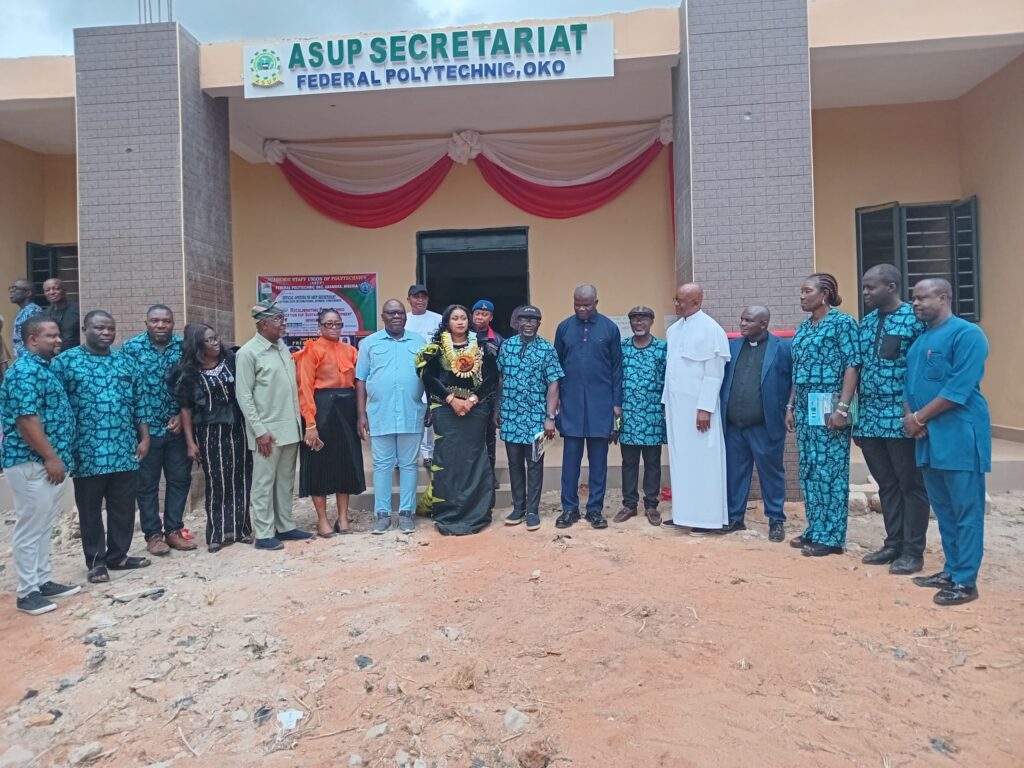
“Moreover, the ASUP Federal Polytechnic Oko Chapter Secretariat complex which has just been commissioned by our quintessential Rector, Dr Chioma Irene Awuzie was part of the Current Chapter Executive Council (CEC) campaign promises to build the Secretariat to the decking level but we have
exceeded the target and succeed in opening and commissioning the Secretariat for use by members, thanks to the CEC and the entire Congress for their support,” said Oduah.
In her welcome address , Federal Polytechnic Oko Rector, Dr. Chioma Irene Awuzie said that for national development, recalibrated Polytechnic Education system will directly contribute to Increased Industrial productivity, Reduction in youth unemployment, growth of Small and Medium Enterprises, Enhanced labor market relevance and Stronger digital and technological ecosystem.
“I call upon all the guest speakers to focus on problem solving. We must collectively translate intensions into measurable institutional outcomes, Align Curricular with labor market realities, Harness infrastructure and innovation to develop market- ready skills,” said Awuzie.
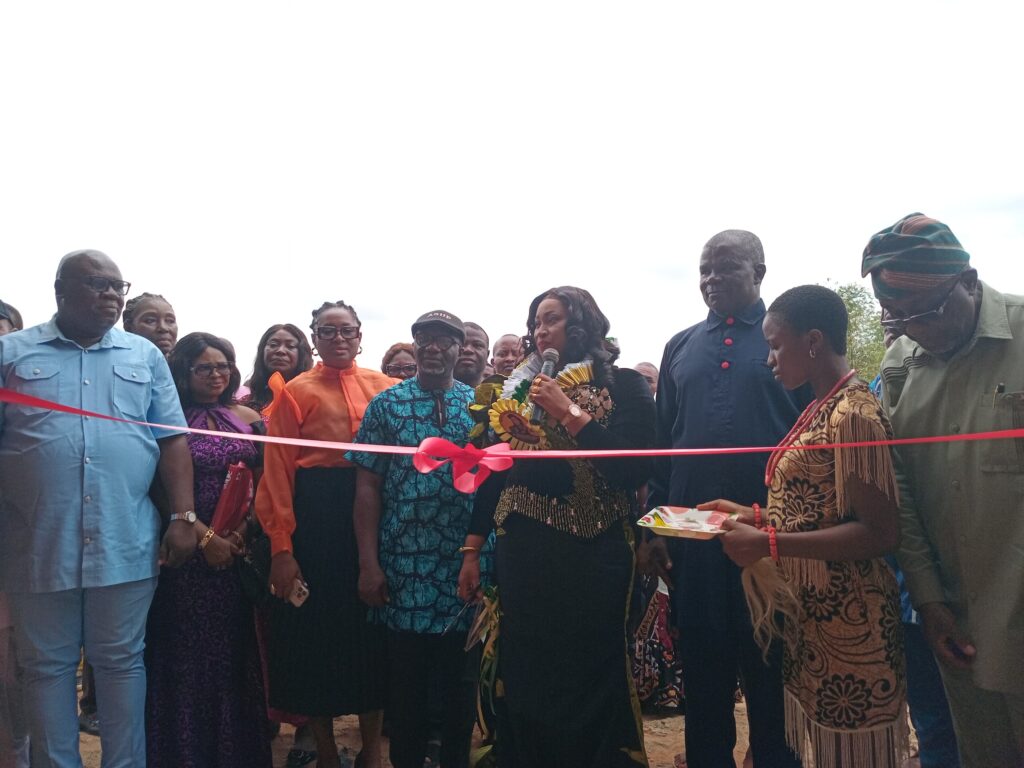
Commissioning the ASUPOKO Secretariat, Dr Irene Awuzie commended Barr Fidelis Odua and his executive for the great feat saying that past ASUP administrations tried to build the Secretariat but could not do much but he made it possible during his own tenure.
Presenting her paper titled ‘Digital Transformation and ICT Integration in Polytechnic Education’ , Federal Polytechnic Oko, Deputy Rector, Dr Nkiruka Akabuike recommended : ‘For policy makers, Develop national or regional digital education strategies specific to TVET/polytechnic sectors that include financing models, quality assurance, and digital skills benchmarks (UNESCO, 2020). Incentivize public–private partnerships for shared infrastructure and curriculum co-design.
“For institutional leaders, Embed digital strategy within institutional mission and planning, allocate multi-year budgets for infrastructure and professional development, and establish cross-functional digital transformation teams.
Adopt the six-domain framework to assess readiness and prioritize interventions.
“For Educators and curriculum designers,
Redesign programs around competency outcomes aligned with industry needs; integrate simulations, virtual labs, and workplace-based assessments.
Invest in continuous professional development using communities of practice and micro-credentials for digital pedagogies.
“For industry partners, Co-create curricula, provide access to equipment or virtualized environments, and offer structured workplace placements that complement digital instruction.
For researchers, Conduct longitudinal, mixed-method evaluations of student learning, graduate employability, and cost-effectiveness of ICT interventions in polytechnics. Prioritize research on equitable access, the efficacy of virtual labs for hands-on skills, and governance models for learning analytics,” Akabuike recommended.
Other Lead paper presenters, Prof. Angela Nwammuo and Dr. Otuu Ogbonnia also encouraged the Polytechnic community to seek collaboration with industries in the organized private sector for alternative sources of funding.
According to the Former ASUP NationalPresident and Chairman of the Hybrid Conference, Dr. Chibuzo Asomugha, the speakers and discussants were quite insightful and seminal but the only challenge we have is the lack of interest from key stakeholders. Imagine that we held such a conference without any representation or functionary from the Federal Ministry of Education or NBTE.
“The theme connects and resonates with the present need of the Polytechnics but it is not just presenting papers, who will drive the presentations and resolutions from this conference in the absence of key stakeholders. Perhaps, we will summarize the recommendations, call to action, core policy directions in a communique and send to the appropriate authorities.
“Reimaging, reintegration and redirecting Polytechnics education considering the tech-ecosystem within which the world is operating now is necessary. We cannot continue to produce theoretically based graduates who are not market or industry ready. We need to go back to hands on, vocational and skill based education,” said Asomugha.
Moreso, the ASUP NationalPresident Comrade Shammah Kpanja who was represented by the Zone Coordinator, Dr Richard Ilomua said that the topic was apt and captured the present need of Polytechnic Education to meet the purpose why Polytechnics were formed originally.