
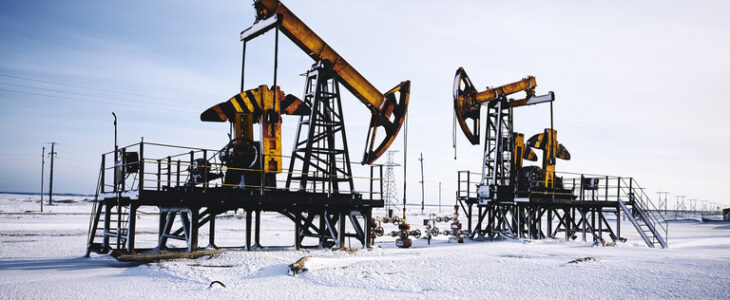
Escalating tensions involving Israel, the United States and Iran has triggered a sharp rally in global oil prices over the weekend, pushing Brent crude close to the $80 per barrel mark before a mild correction in early Monday trading.
Brent climbed from $73 per barrel on Friday to $79.49 on Sunday, before easing slightly to $78.19 in the early hours of Monday, March 2, 2026.

Brent crude, the global benchmark, climbed to $79.21 per barrel by 2pm on Monday amid escalating hostilities between Iran and Israel, particularly after Saudi Aramco temporarily shut its Ras Tanura refinery following a limited fire caused by debris from intercepted drones.
Although Saudi officials reported no casualties and said operations were stabilizing, they alleged that the United States had redirected air defence systems to protect Israel, effectively leaving Gulf states hosting American military bases exposed to potential Iranian retaliation.

This incident has sparked fears over the vulnerability of energy infrastructure in the world’s most critical oil-exporting corridor and reflects heightened risk premiums in energy markets following attacks on critical infrastructure and fears of broader regional spillover.
For Nigeria, one of Africa’s largest crude producer, higher oil prices would typically signal fiscal relief. But experts noted that structural constraints may limit the benefits at a time when currency volatility is amplifying macroeconomic stress.
On the streets of Lagos and Abuja, the naira weakened to N1,375/$1 at the parallel market, despite recent monetary tightening measures. The currency’s fragility adds another layer of complexity to the oil price surge, as gains on the export side risk being offset by inflationary pressures and external financing gaps. Although, the Central Bank in its recent monetary policy meeting had stated that global economic activities would strengthen, it warned that there was a likelihood of significant headwinds such as escalation of trade disputes and geo-economic fragmentations.
In a new assessment,Africa’s geopolitical and economic advisory firm SBM Intelligence urged FG to move beyond its traditional “wait-and-see” posture and adopt a proactive strategy to shield the Nigerian economy from cascading global shocks.
The firm’s report tagged; Epic fury, Enduring consequences: The Iran strikes, global shockwaves and Africa’s strategic reckoning, stated that the immediate oil price rally masks deeper structural vulnerabilities while adding that Nigeria’s crude output remains around 1.5 million barrels per day, significantly below its estimated technical capacity of nearly 2 million barrels.
According to the firm, years of under-investment, pipeline vandalism and crude theft have constrained the country’s ability to ramp up production in response to price signals.
Compounding the issue, a substantial portion of Nigeria’s crude is committed under long-term supply contracts with international trading firms. These agreements, often priced below prevailing spot levels, mean the full upside of Brent’s rally may not translate into higher short-term revenues for the federation account. “The windfall many anticipate will largely accrue to trading partners rather than to the federation account,” the report states, warning that expectations of sudden fiscal relief may be misplaced.
Despite its status as a crude exporter, Nigeria remains heavily dependent on imported refined petroleum products. Since the removal of fuel subsidies, domestic pump prices have become directly exposed to international crude fluctuations. Each upward movement in brent feeds into transport costs, food inflation and broader consumer prices.
The conflict’s implications extend beyond economics, SBM Intelligence argues while adding that Nigeria’s foreign policy posture, traditionally calibrated to balance relations between Israel, Arab Gulf states and Tehran, may come under renewed scrutiny.
Successive administrations have maintained diplomatic ties with Israel while affirming Palestinian self-determination and preserving working relations with Iran. That balancing act has shielded Nigeria from overt entanglement in Middle Eastern rivalries.
Yet, the advisory firm suggests that the country’s reactive diplomacy leaves it vulnerable to secondary shocks and recommended that the FG prioritize modernization of consular services, expand real-time economic intelligence capacity and deepen regional African coordination to anticipate spillover effects.
“The appropriate response lies in strengthening the tools we do possess rather than attempting to project power we lack. Consular services for Nigerians abroad must be modernised and expanded. Economic intelligence on global energy markets needs to inform fiscal planning. Engaging with both Middle Eastern and African partners to anticipate and manage conflict spillovers would serve our long-term stability. The day after this conflict may prove more dangerous than the day before.
The alternative is to remain passive recipients of shocks generated elsewhere, perpetually hoping that the next crisis will spare us. That hope has never been a strategy, and it will not become one now”, the firm concluded.
On the other hand, Afrinvest, in its economic flash-note, said that the development could support FG’s oil revenue outlook, particularly if domestic production remains stable and operational disruptions are contained.
However, the research and investment firm said, “Businesses and Households may need to prepare for potential price pressures across multiple segments of the economy as higher energy and logistics costs transmit through broader consumer and production prices”.
Credit: The Sun