
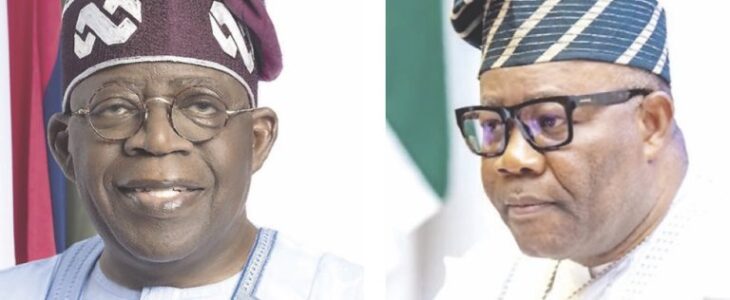
In 2025, Nigeria’s Senate stood at the intersection of lawmaking, crisis management and political power, navigating a year defined by economic pressure, worsening insecurity and contentious politics. Under the leadership of Senate President Godswill Akpabio, the 10th Senate exercised its constitutional authority through landmark legislation, fiscal oversight, and extraordinary political approvals, while also drawing sustained public scrutiny over internal controversies, governance choices and the broader balance of power between arms of government.
As Nigerians confronted inflation, abductions, labour unrest and democratic anxiety, the Senate increasingly positioned itself not just as a lawmaking body but as a national intervention platform. Plenary debates, committee hearings and resolutions reflected an institution attempting to respond to overlapping national emergencies while also asserting its relevance in a political environment dominated by executive power.
This legislative assertiveness unfolded against a shifting political composition within the chamber. Between the inauguration of the 10th Senate in 2023 and the end of 2025, party strength changed significantly, consolidating the dominance of the ruling All Progressives Congress (APC). The APC’s numbers grew from 59 senators in 2023 to 78 by the end of 2025, an increase of 19 seats, largely driven by defections. In contrast, the Peoples Democratic Party (PDP) saw its representation decline from 36 to 23, losing 11 seats, while the Labour Party fell from eight senators to three. Smaller parties such as the NNPP, SDP and YPP each lost a seat, while the All Progressives Grand Alliance (APGA) have two seats. One seat, Enugu East, remained vacant following the death of Senator Ezea. The realignment strengthened the APC’s legislative grip and shaped voting patterns, oversight dynamics and the Senate’s overall posture toward the executive.
Budgetary Power and Economic Direction

Central to the Senate’s 2025 agenda was the passage of the 2025 Appropriation Bill, a multi-trillion-naira budget that set the fiscal tone for the year amid fragile economic recovery and mounting public expectations. Following weeks of committee scrutiny, public hearings and sectoral engagements, lawmakers approved increased allocations to defence, infrastructure, education, healthcare and social intervention programmes, alongside heavy debt servicing obligations that continued to consume a significant portion of projected revenue.
Senators argued that expanding capital expenditure was necessary to stimulate economic recovery, generate employment and address Nigeria’s longstanding infrastructure deficit. However, debates on the floor of the chamber reflected public unease over rising debt, declining purchasing power and revenue shortfalls, with lawmakers repeatedly warning that poor implementation could undermine the budget’s intended impact on ordinary citizens already struggling with high living costs.
Complementing the annual budget was the Senate’s approval of the Medium-Term Expenditure Framework (MTEF) and Fiscal Strategy Paper for 2025–2027, which outlined revenue projections, borrowing limits and macroeconomic assumptions over a three-year horizon. The MTEF was intended to shape Nigeria’s medium-term fiscal trajectory, reinforcing legislative influence over economic planning beyond a single budget cycle and aligning national spending priorities with longer-term policy objectives. However, the budget underperformed dismally with its capital component left untouched. But the chamber defended the executive on the non-performance of the 2025 budget and poor funding of the concurrently running 2024 budget, attributing their failure to revenue shortfalls.
Tax Reform and Revenue Expansion
In response to mounting fiscal pressure and declining oil revenues, the Senate passed tax reform bills aimed at modernising Nigeria’s tax system and boosting government revenue. The legislation sought to streamline tax administration, reduce leakages, eliminate duplications and expand the tax base in line with broader economic reforms pursued by the executive. While the reforms were presented as necessary to fund public services, stabilise government finances and reduce reliance on borrowing, concerns were raised about their potential impact on small businesses, informal sector operators and low-income earners already grappling with economic hardship. The debate underscored the senate’s challenge in balancing fiscal sustainability with social protection and equitable economic outcomes.
Electoral Reform and Democratic Architecture
Electoral reform featured prominently in the senate’s legislative priorities throughout 2025, reflecting lessons drawn from previous electoral cycles. The chamber advanced the Electoral Bill, 2025, intended to amend existing electoral laws and address gaps observed in past elections. Proposed changes included stronger safeguards for the independence of the Independent National Electoral Commission (INEC), revised election timelines, improved logistics planning and clearer dispute resolution processes.
In a related move, the senate passed second reading of a bill proposing same-day conduct of all general elections, covering presidential, governorship, National Assembly and state assembly polls. Proponents argued that the reform would reduce election costs, curb voter fatigue and limit prolonged political tension, while critics cautioned that Nigeria’s logistics, security and infrastructure challenges might complicate such a consolidated process.
Together, these legislative efforts reflected the senate’s attempt to recalibrate Nigeria’s democratic framework ahead of future elections and restore public confidence in electoral integrity.
Security Crisis and Senate Interventions
As insecurity deepened across Nigeria in 2025,marked by mass abductions, banditry, insurgency and communal violence, the senate expanded its role beyond legislative oversight to active engagement, adopting both symbolic and consultative approaches to national security challenges through its security summits.
In a significant departure from routine parliamentary practice, Senate organised zonal security summits across the six geopolitical zones, bringing together governors, traditional rulers, security chiefs, community leaders and civil society actors. The summits were designed to gather grassroots perspectives on insecurity and generate region-specific solutions tailored to local realities.
Lawmakers described the initiative as an acknowledgment that Nigeria’s security crisis required local intelligence, community participation and coordinated policy responses. Resolutions from the summits emphasised improved intelligence sharing, police reform, better welfare for security personnel and stronger collaboration between federal and state authorities, reinforcing the senate’s role as a convening authority. A national summit which will bring together national security stakeholders is scheduled to hold in January 2026.
Throughout the year, the senate consistently condemned the spate of school abductions and mass kidnappings, describing them as a direct assault on national stability and citizens’ right to safety. During plenary debates, senators warned that unchecked abductions threatened education access, economic activity and public confidence in government institutions.
The chamber repeatedly urged security agencies to intensify rescue operations and called for tougher penalties against perpetrators, while also pressing the executive to address the socio-economic drivers of insecurity, including unemployment, poverty and weak local governance.
In a key constitutional exercise, the senate confirmed the appointment of new Defence Chiefs in 2025, following their nomination by President Bola Tinubu. During the confirmation process, lawmakers subjected the nominees to scrutiny over strategy, professionalism, operational effectiveness and commitment to human rights.
After confirmation, the senate charged the Defence Chiefs to prioritise intelligence-driven operations, protect civilians and restore public confidence in the military, while stressing that results,not rhetoric, would define their tenure and legacy.
Labour Mediation and Social Stability
The senate also intervened in labour disputes, particularly tensions involving the Academic Staff Union of Universities (ASUU). As industrial action threatened to disrupt academic calendars nationwide, Senate committees engaged union leaders and government officials in mediation efforts, positioning the legislature as a stabilising force in national labour relations and social cohesion.
Approval of Rivers State Governor’s Suspension
One of the most consequential political decisions of the year was the senate’s approval of President Bola Tinubu’s proclamation suspending Rivers State Governor Siminalayi Fubara and declaring a state of emergency in the state. The approval followed months of political instability and governance paralysis in Rivers State due to a power tussle between Fubara and his erstwhile benefactor, the immediate past governor of the state and Minister of the Federal Capital Territory (FCT), Nyesom Wike. After debate, the senate endorsed the executive action, paving the way for federal intervention in the state’s administration.
Supporters argued that the move was necessary to restore order and prevent a breakdown of governance, while critics warned that it set a dangerous precedent for federal overreach into subnational politics. The episode highlighted the senate’s pivotal role during constitutional crises and its capacity to legitimise extraordinary executive powers.
Controversy and Institutional Strain
Despite its legislative and interventionist actions, the senate’s public image in 2025 was shaped significantly by controversy, most significantly the suspension of Senator Natasha Akpoti-Uduaghan following her allegations of sexual harassment against Senate President Akpabio. The handling of the case sparked national protests and renewed debates on gender equity, power dynamics and accountability within Nigeria’s political institutions. While the senate leadership insisted that due process was followed, critics argued that the episode exposed structural weaknesses in internal disciplinary mechanisms and heightened public mistrust.
Oversight Gaps and the Limits of Legislative Independence
The Senate in 2025 struggled to consistently exercise its constitutional role as a check on executive power. Critics argue that this weakness was most evident in the legislature’s handling of fiscal oversight, particularly the implementation failures surrounding the 2024 and 2025 federal budgets.
Although the Senate passed both budgets and amendments, lawmakers largely failed to hold the executive accountable for persistent delays, poor capital project execution and revenue shortfalls. Key ministries, departments and agencies repeatedly missed budget performance targets without facing sustained legislative sanctions, reinforcing perceptions that budget passage had become routine rather than a tool for accountability.
Beyond budgeting, the senate was also criticised for its muted response to controversial executive actions, often relying on resolutions and statements rather than firm legislative pushback. Analysts noted that while the chamber readily approved executive requests, from borrowing plans to emergency proclamations, it showed limited appetite for enforcing compliance when implementation faltered.
A year of assertion and ambiguity
By the close of 2025, the Nigerian Senate had firmly asserted itself as a powerful political institution shaping with security discourse, electoral reform and crisis governance. Through the passage of budgets, tax and electoral bills, the convening of zonal security summits, and an approval that altered the political trajectory of an entire state, the Red Chamber responded to the country’s most pressing challenges.
Yet, beyond the volume of legislation and high-profile interventions, the deeper measure of the senate’s performance lay in its response to the everyday realities confronting Nigerians. Throughout the year, lawmakers acknowledged the strain imposed by inflation, rising living costs and insecurity, reflected in debates prioritising social intervention, education, healthcare and defence spending.
On the economic front, the senate aligned itself with efforts to stabilise public finance but for many citizens, the immediate impact of these reforms remained difficult to feel, reinforcing scepticism about policy outcomes.
In security, zonal summits, repeated condemnations of kidnappings and scrutiny of defence leadership demonstrated seriousness, yet persistent violence underscored the limits of legislative influence. At the same time, internal controversies touching on ethics and power complicated the senate’s moral authority.
Taken together, 2025 presented a senate that was politically consequential, yet constrained by the enduring gap between legislative action and lived citizen experience. As Nigeria edges closer to another electoral cycle, expectations are defined not by the number of bills passed, but by whether legislative power translates into tangible improvement in people’s lives. In that sense, the legacy of the 10th Senate in 2025 will be judged not only by legislative pronouncements, but by the everyday realities of the people it was elected to serve.
Credit: The Sun