
Facing Congress three years before Russia invaded Ukraine, Donald Trump’s recently departed Russia adviser made an extraordinary admission.
Fiona Hill, a Durham-born Russia hawk, warned that the Kremlin wanted a free run at Ukraine in exchange for cutting ties with Venezuela.
The Russians “were signalling very strongly that they wanted to somehow make some very strange swap arrangement between Venezuela and Ukraine”, she told Congress.
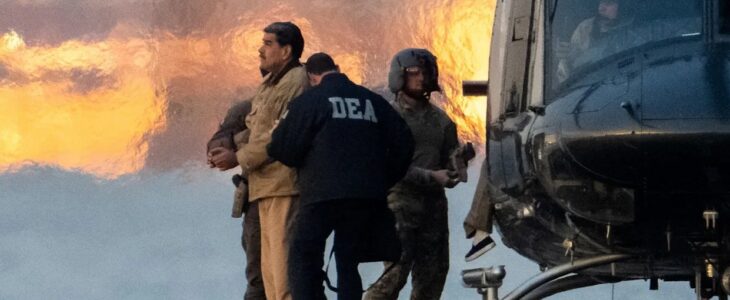
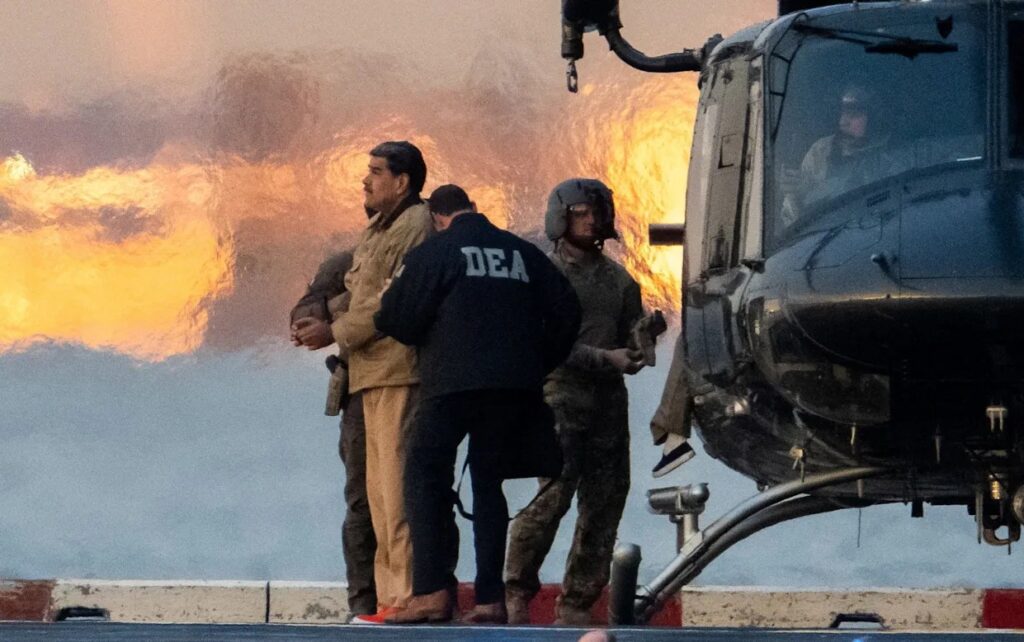
The US military’s smash-and-grab operation to capture Nicolas Maduro on Saturday morning has stirred memories of the deal that was on the table in 2019 when Ms Hill spoke.
The Delta Force raid on Venezuela went remarkably smoothly, with only minor injuries sustained by soldiers and barely any resistance from Russian-supplied air defences.

Observers worry that the Venezuela attack could, at the very least, act as a signal to Russia as it fights on in Ukraine and the US slowly withdraws its support for Europe.
“Trump’s very clear energetic influence in the Western Hemisphere could lead to an understanding that we get to run things here and they get to run things in their neighbourhood,” John E Herbst, the former US ambassador to Ukraine, told The Telegraph. “There are some Ukrainians who’ve shared that thought.”
The Kremlin has not distanced itself entirely from the premise.
Dmitry Medvedev, the former Russian president who remains close to Vladimir Putin, said that although Mr Trump’s actions were unlawful, they were consistent with his history of defending US national interests, adding that Latin America was part of his country’s “backyard”.
‘You’re in our backyard’
“Medvedev’s language echoes that of other Russian officials and commentators back in 2019,” Ms Hill, now a senior fellow at the Brookings Institution, told The Telegraph.
At the time, she likened Russia’s proposal to the Monroe Doctrine, a 19th-century policy under president James Monroe that sought to establish America’s sphere of influence.
“They were basically signalling: You know, you have your Monroe Doctrine. You want us out of your backyard. Well, you know, we have our own version of this. You’re in our backyard in Ukraine,” she said in her testimony.
The principle has in recent months been enthusiastically adopted by the Trump administration – nicknamed the “Donroe Doctrine” – as part of an effort to declare the Western Hemisphere off-limits to adversaries, including Russia and China.
“This is the Western Hemisphere. This is where we live – and we’re not going to allow the Western Hemisphere to be a base of operation for adversaries, competitors, and rivals of the United States,” Marco Rubio, the US secretary of state, said on Sunday.
On the face of it, the president’s daring mission dealt a body blow to Putin, cutting Moscow off from its closest ally in the region and a source of oil revenues.
The display of US military might also put another dent in the reputation of Russia’s paper-thin security guarantees, which had already been exposed by the collapse of Bashar al-Assad’s regime in Syria and the US bombing of nuclear sites in Iran last year.
Volodymyr Zelensky could not suppress a wry smile when he was asked about the strikes, telling reporters: “If you can do this with dictators, so easily, then the United States knows what needs to be done next.”
But analysts also warn it sends a message to Russia and China: we look after our backyard, you look after yours.
Despite publicly condemning the strikes and demanding Mr Maduro’s release, the Kremlin’s spin-doctors have drawn parallels between the US military’s lightning raid and Russia’s own military conquest.
Alexander Dugin, the fascist philosopher known as “Putin’s Rasputin”, said: “The capture of Maduro demonstrates that international law no longer exists — only the law of force applies.”
Alexey Pushkov, a Russian senator, accused the US of returning the world to “the savage imperialism of the 19th century”, adding: “Won’t the ‘triumph’ turn into a disaster?”
Meanwhile, members of Russia’s pro-war Z-blogger community voiced admiration on Telegram, discussing how Putin’s army could learn from the “exemplary” US operation.
“The United States carried out a coup in Venezuela, struck the country, and demonstrated that international law means nothing to a nation that considers itself a hegemon,” said Igor Girkin, a former soldier and FSB officer turned commentator.
“In short, they showed how a great power should act against emerging threats before they become too serious and insurmountable.”
America’s unabashed adoption of great-power diplomacy and desire to dominate the Western Hemisphere also places Western leaders in a bind, none more so than Ukraine.
Ukraine reluctant to endorse unilateral military action
Andriy Sybiha, the country’s foreign minister, issued a lukewarm response, condemning Mr Maduro’s regime for its human rights violations while emphasising that developments should proceed “in accordance with the principles of international law”.
It was a measured reaction that betrayed Ukraine’s reluctance to endorse unilateral military action against a sovereign state. After all, that is precisely what the country has been fighting against for the past three years.
According to Michael Kofman, a Russian military analyst at the Carnegie Endowment for International Peace, the Trump administration’s decision to strike Venezuela without even the “veneer of justification” “substantially frays” any sense of international order.
He adds that it “will make it much harder in the future for the US to convince other states that this type of behaviour should be punished”.
“By using force to assert its hegemony in the Western Hemisphere, the US is trading these short-term gains for a long-term structural cost to its overall position in the international system and to the advantages it enjoys over its rivals Russia and China,” he said.
Mr Trump’s ousting of Mr Maduro has received a mixed response among Ukrainian supporters.
“No one in Ukraine cares how Russia will try to justify its act of aggression against our country,” said Serhii Kuzan, the chairman of the Ukrainian security and cooperation centre, who called for the US to take similar resolute action against Moscow.
Mr Herbst said that Russia’s paralysis in the face of the US operation was indicative of its “diminishing global power”.
“Our military is vastly superior to theirs, but also their ability to project power used to be much greater, before they got bogged down in Ukraine,” he said.
Mr Trump has also boasted about the riches that will come from taking over the Venezuelan oil market, prompting concern in Russia where Putin has relied on oil and gas sales to fund his war machine.
Oleg Deripaska, an oligarch, said that Mr Trump could effectively bankrupt the Kremlin if he succeeds in driving down oil prices.
However, there are also lingering concerns that the end of Mr Maduro won’t necessarily bring a halt to Kremlin influence.
Delcy Rodriguez, the country’s interim president, who was reportedly in Russia at the time of Mr Maduro’s capture, said as recently as November that the bond between Moscow and Caracas “cannot be destroyed”.
The new leader was caught in a war of words with Mr Trump over the weekend after she bristled at claims she would do “whatever” the US administration wanted.
If the US cannot exert its influence over the new Venezuelan leader in the manner it hopes, Mr Herbst said, “this could wind up backfiring on the US, and that’s to Russia’s advantage”.
As Ukraine zeroes in on the terms of a peace deal, security guarantees have played a key role, with Kyiv urging Mr Trump to commit to a long-term agreement — a proposal that has riled Moscow.
The president has waxed and waned in his support for Ukraine, but has in recent days voiced frustration with Russia, telling reporters on Saturday: “I’m not thrilled with Putin. He’s killing too many people.
Yet as Mr Trump signals a return to a world order based on spheres of influence, analysts warn it will not come without a cost.
Mr Kofman said: “If the US is approaching this war like a classical great power, you have to ask how much are those security guarantees going to be worth?”
Credit: Yahoo News