
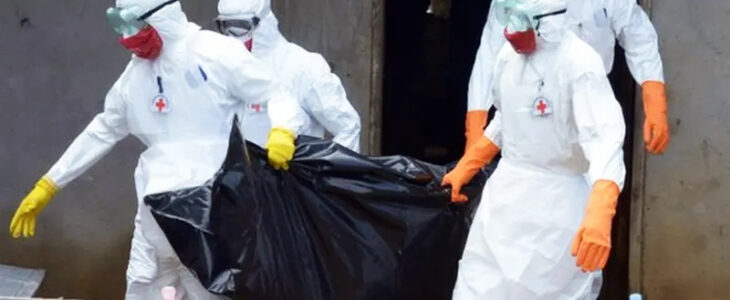
The worsening outbreak of Ebola Virus Disease (EVD) in some African countries, particularly the Democratic Republic of Congo (DRC), Uganda, and now extending to South Sudan, has triggered panic among Nigerians.
Death toll from the disease in the affected countries has continued to rise while hospitalisations have increased significantly. As a result, several countries have tightened border surveillance, leaving many people worried about the possibility of cross-border transmission.

A few days ago, the Nigeria Centre for Disease Control (NCDC) attempted to calm public fears when it confirmed that no case of EVD has been detected in Nigeria. It assured Nigerians that it is closely monitoring developments across all entry points into the country, particularly international airports.
Director-General of the NCDC, Dr. Jide Idris, in a statement, confirmed that the agency was working closely with relevant local and international partners and stakeholders, including the Port Health Services of the Federal Ministry of Health and Social Welfare, to ensure continued vigilance and preparedness within the public health system.

He said: “We are aware of the ongoing Ebola outbreak in the DRC and recent reports of a confirmed imported case in Uganda linked to the outbreak in the DRC. We have activated all our public health emergency measures to ensure proper response. This includes enhanced surveillance, laboratory testing, infection prevention and control (IPC), case management, contact tracing, and risk communication activities.”
Despite these assurances, many Nigerians remain fearful and uncertain about the evolving public health situation, especially considering Nigeria’s porous land borders and concerns that some airport officials could be compromised.
Some Nigerians have expressed doubts about the ability of health authorities to effectively manage a possible outbreak due to perceived weaknesses in public health emergency preparedness. Others, however, remain optimistic, citing Nigeria’s successful containment of the Ebola outbreak in 2014.
Some have even suggested that President Bola Tinubu and members of his delegation who recently returned from East African countries, including Kenya and Rwanda, where they attended several meetings, should observe the recommended 21-day quarantine period.
What is Ebola Virus Disease?
According to the NCDC, Ebola Virus Disease is a severe viral illness caused by the Bundibugyo Ebola virus. It is primarily transmitted through direct contact with the blood, bodily fluids, secretions, or contaminated materials of an infected person or animal.
Medical experts said the incubation period ranges from two to 21 days, while symptoms often resemble those of common illnesses prevalent in Nigeria and other countries. Symptoms may include fever, weakness, headache, muscle pain, sore throat, vomiting, diarrhoea, and, in severe cases, unexplained bleeding.
Health experts stressed that a high index of suspicion is required for early detection, especially in patients presenting with compatible symptoms and relevant travel or exposure history.
They also emphasised that early detection, prompt isolation and treatment, contact tracing, infection prevention and control, community engagement, and safe burial practices remain critical to stopping transmission.
Reports of Ebola outbreak spark fears
Reports of Ebola outbreak in parts of Africa have prompted a range of reactions and renewed anxiety as the images of health workers in full protective gear, wearing of nose masks, hand washing, social distancing, and other forms of preventive measures are gradually gaining ground.
Folake Adeyemi, a secondary school teacher, expressed concern after hearing about the outbreak of Ebola in DRC on the radio.
“2014 still feels like yesterday. It’s not an experience I would ever want to have. Now I carry hand sanitiser everywhere and I’ve told my students not to share water bottles and wash their hands regularly. Maybe I’m overreacting, but I would rather overreact and be safe,” she said.
A commercial driver, Homa Umeorah said he is following NCDC updates on social media daily but worries about information reaching rural areas.
He said: “I can read the updates online, but my parents in the village don’t use smartphones. If something happens, how will they know? The government needs to use radio and town criers, not just on social media. For now, I’m just going about my business and hoping it doesn’t return.”
Susan Oghenero, a hairdresser, says she has changed how she runs her shop since the news broke.
“We use scissors, clippers, and combs for different people. Since I heard about the outbreak, I have been concerned, but it has always been my practice to sterilise everything after each client and wash my hands between customers. I can only pray we don’t experience that epidemic again.”
WHO, Africa CDC react
The World Health Organization (WHO) reacted swiftly to the outbreak last week following the rapid rise in suspected infections and deaths across affected communities in Central and East African countries.
WHO subsequently declared the outbreak a public health emergency after confirming that at least 81 suspected deaths and over 246 confirmed cases had been recorded in the affected countries as of Sunday, May 17, 2026.
The organisation said the decision followed an assessment of the public health risk posed by the outbreak, the possibility of international spread, and the potential implications for international movement and trade. WHO added that it had issued temporary recommendations to countries responding to the outbreak in line with the International Health Regulations (2005).
As of Wednesday, WHO Director-General, Dr. Tedros Adhanom Ghebreyesus, declared that more than 600 cases and 130 deaths had been recorded, with figures expected to rise. He said the numbers are likely to change as field operations scale up, including strengthened surveillance, contact tracing, and laboratory testing.
“We are deeply concerned about the scale and speed of the epidemic outbreak. This is an indication that the outbreak had been spreading long before it was detected,” he said.
He urged affected countries to activate emergency operation centres, intensify surveillance, strengthen infection prevention and control measures, improve contact tracing, and establish specialised treatment centres. WHO also advised neighbouring countries to strengthen preparedness and rapid response systems.
“No country should shut its borders or impose restrictions on travel and trade. Such restrictions could be disastrous. It could encourage the use of informal and unmonitored border crossings, thereby increasing the risk of disease spread and undermining response operations,” the organisation warned.
The global body encouraged confirmed Ebola patients not to travel internationally except as part of approved medical evacuations, while contacts of infected persons should remain under monitoring for 21 days. Similarly, the Africa Centres for Disease Control and Prevention (Africa CDC) said it has activated strategic measures to support response efforts in affected communities in the DRC and Uganda.
Africa CDC, in a statement, confirmed that it had activated the Incident Management Support Team (IMST), involving all partners as the regional coordinating mechanism for the affected countries.
It also approved a 72-hour Incident Action Plan covering response activities in the DRC and Uganda, as well as preparedness measures in South Sudan. The agency added that it had deployed multidisciplinary surge teams to support the DRC and Uganda, while also providing readiness support for neighbouring countries. It further disclosed that it had also established medical countermeasure workstreams to assess diagnostics, Personal Protective Equipment (PPE), therapeutics, vaccines, and cold-chain needs pending final sequencing results.
Africa CDC mandated its Science, Innovation and Research team to coordinate sequencing follow-up, evidence review, product options, research protocols, and partner engagement.
Nigeria’s experience with Ebola
Nigeria had its share of the Ebola outbreak in 2014. The unexpected outbreak claimed several lives, including Dr. Stella Adadevoh, a consultant physician with First Consultants Hospital in Obalende, Lagos.
On July 20, 2014, Nigeria recorded its index case of Ebola Virus Disease in Mr. Patrick Sawyer, a Liberian-American diplomat infected with the virus.
He collapsed at the Murtala Muhammed International Airport in Lagos and was taken to First Consultants Hospital for treatment. It was during a medical examination that he was diagnosed with EVD.
Late Dr. Adadevoh and her medical team recognised the threat and courageously refused to discharge Mr. Sawyer despite intense political and diplomatic pressure. Their actions prevented the virus from spreading freely within the densely populated city of Lagos.
The outbreak was largely contained in Lagos, although a diplomat who travelled to Port Harcourt caused a secondary cluster of infections. But out of the 20 confirmed and probable cases recorded in Nigeria, eight people died, including Dr. Adadevoh and several healthcare workers, while 12 others recovered. The outbreak exposed deep weaknesses in Nigeria’s healthcare system and prompted gradual improvements in infrastructure, manpower, administration, and emergency response capacity.
Since successfully containing the outbreak in 2014, Nigeria’s public health system has maintained a high level of alertness. The NCDC and state health agencies have continued monitoring Ebola outbreaks in neighbouring regions while sustaining surveillance systems and port health measures aimed at promptly isolating and containing imported cases.
Lagos ready to battle disease
Addressing the concerns, Chairman of the Nigeria Medical Association, (NMA) Lagos Branch, Ewonowo Temidire Sunday, stressed that the state is ramping up infectious disease preparedness across public and private health facilities following the resurgence of the virus.
Ewonowo said Lagos’ position as Nigeria’s main gateway for travel and commerce makes readiness non-negotiable. He cited the state’s experience during the 2014 Ebola outbreak as proof that early action works.
“We understand clearly that preparedness is not optional. The NMA Lagos State Branch has continued to engage doctors across both public and private health institutions on infectious disease preparedness and emergency response protocols.”
According to him, the association is working with the Lagos State Ministry of Health, hospital management boards, and other professional bodies to strengthen training on Ebola case recognition, rapid triage, isolation procedures, infection prevention and control, and proper use of personal protective equipment. He added that healthcare facilities have been urged to reactivate internal surveillance systems and maintain a high index of suspicion among frontline workers. He stressed that preparedness must go beyond tertiary hospitals to include private clinics; primary health centres, and emergency care providers, noting that early detection at every level is key to stopping transmission.
On public communication, he warned that fear, rumours, and misinformation often do more damage during outbreaks by discouraging people from seeking care early. To counter this, the NMA is supporting the state government and health agencies to push out clear, evidence-based information through traditional media, digital platforms, and community outreach.
“Doctors are also being encouraged to serve as trusted voices in their communities by educating patients on symptoms, preventive measures, and the importance of early presentation to health facilities,” he said.
Ewonowo said engagement with religious leaders, market associations, community groups, and local influencers is critical to ensure health messages reach people in languages and formats they trust.
His message to residents is straightforward: “stay calm, rely on credible sources, follow recommended preventive measures, and report suspected symptoms early.”
He declared that panic and misinformation are dangerous, but informed vigilance and collective responsibility will help protect communities.
Urgent need to train health workers
Port-Harcourt-based environmental health practitioner, Nelson Confidence, called for an urgent refresher training for frontline health workers and renewed sensitisation campaigns in rural communities, warning that the renewed Ebola outbreak in Africa poses a serious threat to Nigeria and the wider continent. He said frontline health workers remain the first line of defence against the disease and must be adequately prepared.
“Health workers are like the military when it comes to the fight against disease. Ebola is a disease that spreads easily through different routes of transmission and carries a high morbidity and mortality rate. Frontline health workers should be adequately prepared for it,” Nelson said.
He noted that Nigeria’s successful containment of Ebola in 2014 remains one of Africa’s strongest public health achievements and urged authorities to leverage that experience through intensive refresher training for health personnel.
“Nigeria can leverage that experience by focusing on intensive refresher training. Frontline health workers should receive continuous refresher training,” he said. “There are ongoing efforts but they are not adequate.” He expressed concern that public awareness and hygiene practices introduced during the 2014 outbreak have declined, particularly in rural and underserved areas.
“Since the fight against Ebola in 2014 ended, campaigns against Ebola virus disease have reduced drastically, especially among rural communities and underserved areas. This is a very big problem.
“Hygiene practices that were initiated then have been abandoned, and physical distancing has become a thing of the past. It is imperative that authorities reawaken the moribund campaign against the Ebola virus among rural areas to create consciousness on the prevention, control, and reporting of the disease.”
Nelson stressed that health education remains critical in curbing the spread of infectious diseases and called for immediate mobilisation to sensitise rural communities.
“The advantages of health education in the fight against diseases of this nature cannot be overemphasised. It is imperative that we start mobilisation for the sensitisation of rural areas,” he said.
He cited guidance from the World Health Organisation and Africa CDC, noting that early detection, contact tracing, infection prevention, and community sensitisation remain the most important tools for stopping the spread of Ebola.
Chinedu Ikenga, a medical doctor at Gracevale Medical Centre in Enugu, highlighted that institutional memory from 2014 gives Nigeria an advantage to prepare.
“We learned that speed matters more than anything. In 2014, we had to build systems while fighting the fire. Now those systems exist on paper and in practice. Our challenge is keeping them funded and keeping staff trained when there’s no active outbreak.
“If people don’t believe you’ll treat them fairly, they won’t report symptoms early. That’s how outbreaks get out of hand. We can’t wait for a case to arrive before we act. Health security is national security. The systems we invest in now will determine whether we contain the next outbreak in 48 hours or 48 days.”
Abuja-based medical doctor, Ifeoma Abassah also stated that healthcare workers have already been reminded to maintain a high index of suspicion for patients with fever and recent travel history to affected countries.
“We are reviewing our triage protocols and making sure personal protective equipment is available and accessible. The hardest part is avoiding complacency. When you go months without a case, people start to relax. Ebola doesn’t care about that.
“In the cities, we have more resources. In rural areas, a health worker might be the only person for 20 kilometres. If a case shows up there first, they need clear instructions and support fast. That’s where we need more simulation exercises and funding.”
Credit: The Sun