
What to know about the Iran war today:
Iran’s foreign minister on Thursday dismissed President Trump’s threat to wield “Economic Warfare and Isolation on an unprecedented scale” as a diversion from the burgeoning U.S. national debt and a “doubling down on failed policies.” Mr. Trump threatened Iran on Wednesday with “an economic D-Day.”Vice President JD Vance on Thursday said the war with Iran has entered a “new phase” of economic pressure. “We’re going to keep that going because we think that’s the best way to ultimately accomplish the final objective here,” he said on “The Clay Travis & Buck Sexton Show.”The USS Abraham Lincoln aircraft carrier headed home after a nine-month deployment, a U.S. official confirmed to CBS News. The USS George Washington aircraft carrier arrived Wednesday in the Middle East.
USS Abraham Lincoln leaves Middle East, U.S. official says
A U.S. official confirmed to CBS News that the USS Abraham Lincoln aircraft carrier is headed home after a nine-month deployment. It could still take several weeks for it to get back to its home port in San Diego, California.

The USS George Washington arrived in the Middle East Wednesday.
In recent weeks, family members of Lincoln service members voiced worries about deteriorating mental health conditions aboard the ship, as well as sanitary conditions and food shortages.

Vance says war is in “new phase” using economic pressure
Vice President JD Vance on Thursday said the war with Iran has entered a “new phase where the most effective tool that we have is the economic pressure that we can apply to them.”
In an interview on “The Clay Travis & Buck Sexton Show,” Vance noted the “delicate dance” involved.
“We apply economic pressure to them, they’re going to try to apply economic pressure to us,” the vice president said. “But what has been true over the last couple of weeks is they felt a lot more pressure than we have. We’re going to keep that going because we think that’s the best way to ultimately accomplish the final objective here.”
U.S. increases sanctions on network smuggling millions in cash to Hezbollah
Ten people smuggling millions of dollars in cash to the Iran-backed Hezbollah militia in Lebanon have been sanctioned by the U.S. Treasury Department.
The network was previously led by Iranian Gen. Behnam Shahriyari, however, he was killed in an Israeli airstrike in western Iran in June. The same network is now being targeted with sanctions, including against the person who manages the network of couriers, Turkish businessman Yunus Alper Yilmaz, according to the Treasury Department.
Yilmaz is accused of abusing Turkey-based exchange houses as fronts for business dealings with Iran’s Islamic Revolutionary Guard Corps, or IRGC. The other nine people included in the sanctions are the actual couriers who would collect the money from the exchange houses and deliver it to Hezbollah.
The sanctions release also notes the information on the couriers as evidence of the IRGC’s involvement in coordinating attacks by Hezbollah, which is currently fighting a war with Israel in Lebanon and “deep involvement in directing Hizballah’s political decision-making.”
U.S. blockade on Strait of Hormuz redirects 2 more ships, military says
The blockade on commercial ships entering and exiting Iranian ports via the Strait of Hormuz was up to 67 through Thursday, after two more ships were stopped in the last day, according to U.S. Central Command
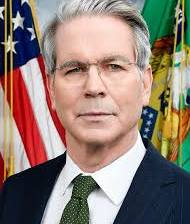
The blockade was reinstated on July 14 after a brief period when a larger number of ships were able to get through following the signing of the U.S.-Iran memorandum of understanding. The Trump administration has shown no inclination to call off the blockade anytime soon, with Treasury Secretary Scott Bessent touting it on Thursday.
“It is a one-two punch,” Bessent told CNBC. “We have the blockade, and we are going to have the toughest sanctions in history.”
The USS George Washington and its strike group have now arrived in the region, CENTCOM said on Thursday, and will begin taking part in the blockade. The aircraft carrier will replace the USS Abraham Lincoln, which has been on a record-long deployment.
Safe passage through Strait of Hormuz can only be guaranteed with lasting regional peace, Oman says
Security for vessels passing through the Strait of Hormuz is only possible once lasting peace is reached in the Middle East, Oman’s foreign minister said Thursday.
“Achieving sustainable security in the Strait of Hormuz requires establishing lasting peace in the region, through restraint, diplomacy and continuous engagement to address the underlying causes of instability, including policies of exclusion and failure to comply with international law,” Omani Foreign Minister Badr Albusaidi said, according to the state-owned Oman News Agency.
Albusaidi’s comments came in a joint press conference with Japanese Foreign Minister Toshimitsu Motegi. Japan is currently negotiating a trade agreement with the Gulf Cooperation Council.
The talks between Oman and Iran over a route of passage through the Strait of Hormuz have broken down. However, Albusaidi said Oman has an “aspiration to conduct more constructive talks to reduce escalation as soon as possible, ensure freedom of navigation in the Straits of Hormuz and Bab al-Mandab, and strengthen coordination between the two countries in this regard.”
President Trump has repeatedly said the U.S. controls the strait, and touted secretive efforts to get millions of barrels out per day, but the number of commercial ships exiting the Strait of Hormuz has often dwindled to single digits lately.
U.S. plans to sell refueling planes to Qatar
The United States on Thursday approved a potential $4.5 billion sale of refueling aircraft to Qatar, which has acted as a mediator in Washington’s war with Iran, the State Department announced.
Qatar had asked to purchase up to four KC-46A aircraft, equipped with missile-warning sensors, the department said in a statement.
The sale, which was sent to Congress for its approval, will help support U.S. national security by “helping to improve the security of a strategic regional partner,” it said.
The deal will “increase Qatar’s capability to meet current and future threats by enhancing its defense capabilities and interoperability with U.S. and allied forces,” it added.
Bessent tells China to “get with the program” when asked about countries helping Iran
The U.S. is not excluding China from its warnings to get on board with President Trump’s new campaign to isolate the Iranian economy and “collapse” the government in Tehran.
Treasury Secretary Scott Bessent underlined in an interview with CNBC that Washington expects both allies and rivals to join the ramped-up campaign on Iran.
“This is going to be the greatest coordinated economic isolation in the history of the world. And we are going to them and saying you are either with us or against us,” he added in a message to allies.
Asked whether the United States would pressure China, Bessent said “many conversations are best to have in private,” but called on Beijing to “get with the program.”
Chinese President Xi Jinping is due to visit the White House on Sept. 24 when the topic of Iran is sure to come up, as it did when Mr. Trump traveled to Beijing for a summit in May.
Credit: Yahoo News