
What to know about the Iran war today:
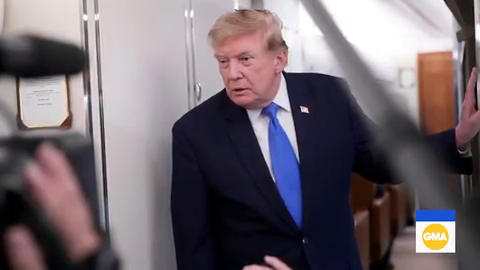
President Trump told Al Jazeera on Wednesday that the U.S. is “achieving a very big victory” as the Iran war nears the six-month mark, but that it “will continue for as long as necessary” and there’s no timetable to resume peace talks.Israeli Prime Minister Benjamin Netanyahu has said he told President Trump recently that a diplomatic deal with Iran is “not possible,” calling the Islamic Republic leadership “savages.”Iran and Oman said Tuesday that they were discussing a proposal to reopen the Strait of Hormuz via a temporary shipping route, as well as a plan to clear sea mines. Tehran has insisted, however, that the U.S. must lift its naval blockade and the war must end before ships are allowed to resume transiting the vital waterway.
USS Abraham Lincoln to make stop in Thailand on its way home to San Diego
The USS Abraham Lincoln aircraft carrier will make a stop in Thailand after its grueling deployment in the Middle East, Thai officials said Wednesday.

The Lincoln was supporting the U.S. war against Iran, and its deployment included a record-setting uninterrupted time at sea of more than 250 days. Concerns have grown about the Lincoln’s lengthy deployment following reports of deteriorating mental health among the crew and shortages of supplies, including food and hygiene products.
Thai defense ministry spokesperson Surasant Kongsiri said the Lincoln will stop in Thailand next week for rest and recovery before returning to its U.S. base in San Diego.

“The stop in Thailand is a chance for the crew to go ashore and relax,” he told reporters at a news conference in Bangkok.
On Tuesday, the Royal Thai Navy said three ships from a U.S. Navy carrier strike group were scheduled to stop in eastern Thailand and that no military exercises would be carried out during the visit.
Iran’s foreign ministry spokesman Esmail Baghaei wrote in a mocking social media post Wednesday that “after months of war – and more than 200 days without a single port call” the Lincoln “is now heading to Thailand for crew R&R. Mission: Project Power. Current mission: Project Vacation.”
Separately Wednesday, the U.S. Navy’s top uniformed officer told reporters that with the surprise needed to launch the Iran war, it took some time to put a “process in place so that we were really replenishing at sea in an effective and systematic way.”
Speaking about the Lincoln, Adm. Daryl Caudle said the issue was not about having enough protein or vegetables, but items like hygiene products, energy drinks and soda that sailors come to expect during long ship deployments.
He said parts, food and “niceties” have different supply chains and that “we had to get all those dialed in,” noting that “there was some learning curve on our replenishment process.”
Iran’s Parliament speaker thanks China for rejecting U.S. sanctions
China, Iran’s largest trade partner, is receiving thanks from Iran’s Parliament speaker after saying it won’t comply with the newest U.S. sanctions.
“We welcome China’s principled statement rejecting illegal sanctions against Iran,” Mohammad Bagher Ghalibaf wrote on X. “The Iran-China comprehensive strategic partnership is rooted in mutual respect, win-win cooperation, and a shared vision for a multipolar world. This relationship needs no one’s permission.”
President Trump last week said he expected all countries to get on board with the sanctions announced on Monday. Treasury Secretary Scott Bessent said in an interview last Thursday with CNBC that China should “get with the program.”
But China rejected those notions almost immediately.
“China has already stated many times that it firmly opposes illegal unilateral sanctions. … China will take all necessary measures to firmly safeguard its own rights and interests,” foreign ministry spokesman Lin Jian said at a news briefing.
Iranian foreign minister pleads with U.N. secretary-general to condemn U.S. actions
Abbas Araghchi, Iran’s foreign minister, addressed a letter to U.N. Secretary General Antonio Guterres on Wednesday asking for the global body to “condemn and reject” the U.S. actions in Iran, especially the new round of sanctions issued this week.
“Now is a crucial moment for the Security Council and all members of the United Nations; either we must defend the principles of sovereign equality, non-interference, and respect for the sovereign rights of States, as enshrined in the Charter of the United Nations; or we surrender to the unilateralism and bullying of a rogue state,” Araghchi wrote in the letter, posted on his official Telegram channel.
Iranian officials have repeatedly called the U.S. actions in Iran a violation of the country’s sovereignty in recent days. Araghchi asked for all members of the U.N. to do three things, including “condemn and reject the use of unilateral coercive measures and secondary sanctions by the United States” to change economic interests; “refrain from recognizing, approving, or implementing” the sanctions; “call on the United States to immediately cease its threats and coercive actions designed to force” countries to alter legitimate economic relations.
He also asked for the U.N. to monitor the humanitarian implications of the sanctions on the Iranian population, and said Iran could retaliate in the interim.
“In the meantime, the Islamic Republic of Iran reserves its right to pursue all available avenues to achieve accountability, reparation and redress, and to hold the perpetrators accountable for the consequences of these inhumane and illegal actions,” Araghchi wrote.
Guterres hasn’t shown an inclination to side with Iran in the conflict, saying on Monday that Iran must end attacks in the Strait of Hormuz and restore “respect of navigational rights and freedoms” in the waterway.
Iran state media reports “constructive” talks with Russia on gas cooperation
Iran and Russia held “constructive” discussions on advancing cooperation in the gas sector, including implementation of an agreement to transfer Russian natural gas to Iran, Iranian state news agency IRNA reported Wednesday.
IRNA said Iranian Ambassador to Russia Kazem Jalali and National Iranian Gas Company CEO Saeed Tavakoli met with Alexey Miller, the CEO of Russia’s state-controlled energy giant Gazprom, in St. Petersburg on Wednesday.
The meeting followed a series of technical discussions between the two countries aimed at implementing a gas cooperation agreement, following on an agreement for the transfer of Russian gas to Iran that was signed in July 2024.
Iranian Oil Minister Mohsen Paknejad previously said the gas would be delivered to Iran using an overland route via Azerbaijan, with Iran receiving the gas at a terminal in Astara, on the country’s far northern Caspian Sea coast.
Jalali has described the project as a “win-win” undertaking for Iran and Russia that could provide significant mutual benefits and help strengthen Iran’s position as a regional energy hub.
Iran’s IRGC says deal with Oman to reopen Strait of Hormuz had been reached, but U.S. must accept conditions
The spokesman for Iran’s powerful Islamic Revolutionary Guard Corps said Wednesday that Iranian and Omani officials reached an agreement weeks ago on terms under which the two nations could control shipping traffic through the Strait of Hormuz — and share the proceeds from fees incurred — but he indicated the U.S. had failed to accept the arrangements.
“The Strait of Hormuz belongs to Iran and the Sultanate of Oman, which is opposite us. About a month ago, we entered into negotiations with Oman and reached results that were acceptable to both sides,” Brig. Gen. Hossein Mohebbi said, according to Iran’s state broadcaster IRIB. “In these negotiations, agreements had been reached regarding the share of each of the two countries from the waters of the strait and the share of Iran and Oman from its revenues.”
“If the United States stops obstructing and returns to the memorandum of understanding, we can open the Strait of Hormuz within the framework of the agreement reached,” he said, stressing, “our conditions must be accepted by the United States.”
Until they are, he said “the Strait of Hormuz will remain closed.”
President Trump has repeatedly insisted the strait is open, but few commercial ships have dared to transit the vital waterway given Iran’s attacks and lingering threats against them doing so without permission.
“The Strait of Hormuz is under our control, and no enemy military vessel is present inside the Persian Gulf,” Mohebbi insisted Wednesday, claiming all U.S. warships had moved at least 250 miles from the strait.Advertisementhttps://bdf0b10ca1ca186aee46051972871774.safeframe.googlesyndication.com/safeframe/1-0-45/html/container.html
Iran and Oman said Tuesday the two nations continue discussing a new proposal to reopen the strait by way of a temporary shipping route, as well as a plan to clear sea mines, but they said no new agreement has been reached.
Stocks prices mixed as oil drops, inflation remains high
Lower oil prices helped lift European stock markets Wednesday, while continued high U.S. inflation weighed on Wall Street. Paris and Frankfurt rose in mid-afternoon trading, though London lagged behind as energy heavyweights BP and Shell were hurt by cheaper oil.
“Lower energy prices are providing a supportive environment for European markets,” said Fawad Razaqzada, market analyst at FOREX.com. “The resilience of the European economy has been more impressive than many had expected.”
In New York, all the main indexes were slightly lower in morning trading. Just before Wall Street opened, the Commerce Department reported that the personal consumption expenditures price index — the Federal Reserve’s preferred inflation measure — rose 3.7% in July compared to the previous year.
While that was largely in line with analyst expectations, it still leaves inflation well above the Fed’s 2% target, keeping alive fears of an interest rate increase.
Both main crude oil contracts have tumbled this week as Iran and Oman say they’re edging toward a deal to open a temporary shipping corridor in the Strait of Hormuz.
While President Trump said Washington would impose an “economic D-Day” on Tehran with a raft of sanctions targeting the Islamic Republic and its trade partners, the U.S. has so far held back from enforcing the measures, which in any case appear softer than many had expected.
Oil prices had dropped more than 3% early Wednesday before recovering a bit, with international benchmark Brent crude back below $90 a barrel.
Credit: Yahoo News