
IGBO IS LOSING ITS THINKING CAP: THE EMERGENCE OF A GENERATION OF EDUCATED ILLITERATES, INTELLECTUALLY VULNERABLE, HOSTILE TO TRUTH AND COMFORTABLE WITH FALSEHOOD — WHERE IS OUR AKỌ NA UCHE?
Growing up, I remember vividly the profound counsel my parents repeatedly imparted concerning the true essence of traditional learning and intellectual development. Beyond academic diligence, they taught me the importance of discipline, respect for our value systems, sound judgment and, above all, the application of native intelligence, which our people aptly describe as Akọ na Uche. My parents were particularly deliberate in distinguishing the acquisition of academic qualifications from the wisdom required to apply knowledge meaningfully to life’s realities.

Today, we are witnessing an exponential proliferation of academic certificates and university graduates, accompanied, rather paradoxically, by an alarming decline in independent reasoning, critical judgment and native intelligence. We appear to be producing more graduates but fewer discerning minds. This is how an educated person gradually becomes an educated illiterate: intellectually decorated, yet deficient in the elementary discipline of questioning, interrogating and distinguishing truth from falsehood.
Igbo land, in particular, is increasingly confronted with this disturbing phenomenon. A dangerously vulnerable educated person can swallow falsehood without interrogation, promote deceit with astonishing enthusiasm, facilitate propaganda and defend demonstrable absurdities, merely to satisfy an emotional, political or ideological appetite. Such a person can knowingly dive into a sea of deception, even when the inevitable destination is destruction, simply because the falsehood serves a preferred narrative.

This is perhaps one of the most dangerous afflictions confronting our generation. It explains why some have descended to the embarrassing depths of eulogising merchants of death and celebrating those who have openly boasted about the destruction of their own brothers and sisters as heroes. They expend enormous intellectual energy on social media defending the very forces that make life miserable for their people at home. Even when truth stares them directly in the face, they deliberately embrace its opposite, provided it advances their preferred narrative.
Our greatest misfortune is not necessarily the absence of education; it is the absence of the intellectual courage to think independently. We have witnessed the devastating consequences of organised falsehood, manipulative preaching, propaganda and deceit. Lives have been lost, families devastated and communities traumatised. Yet, astonishingly, some have learnt so little from these painful experiences.
A people who surrender their right to question, interrogate and demand evidence inevitably surrender their capacity for self preservation. No society can make meaningful progress when its people mistake blind loyalty for patriotism, propaganda for information and emotional attachment for wisdom.
Our political class may not yet fully appreciate the magnitude of this intellectual and social cancer. But the consequences are already visible in the vulnerability of our young people, some of whom have become so consumed by online narratives that they have lost the patience to listen to reason, the humility to learn and the courage to question. A generation that spends more time distorting facts than discovering them is gradually surrendering its future.
It is time for serious introspection. We must recover our intellectual heritage, restore the dignity of independent thought and deliberately rekindle the traditional Igbo virtues of Akọ na Uche. Academic qualifications must once again be complemented by sound judgment, moral courage, discernment and an uncompromising commitment to truth.
The task ahead is undoubtedly formidable, but it is neither optional nor negotiable. The rescue of Ala Igbo must begin with the rescue of the Igbo mind. We must teach our children that education without wisdom is an expensive ornament, intelligence without discernment is a dangerous liability, and knowledge without the courage to defend truth is little more than intellectual surrender.
A people who lose their land may reclaim it; a people who lose their wealth may rebuild it. But a people who surrender their capacity to think, question and distinguish truth from falsehood are in danger of losing the very faculty by which they can recover everything else.
That is the tragedy we must confront. That is the emergency we must address. And that is why the time to recover our Akọ na Uche is not tomorrow. It is NOW.
For, as our elders would remind us, a community that abandons wisdom cannot expect posterity to inherit greatness.
Let us recover our thinking cap before we lose our collective future.
Signed:
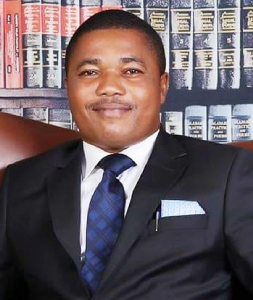
Sir Ifeanyi Ejiofor, Esq. (KSC)
Dunu-Ezeugosinachi
21st October, 2026